Ever feel like your Hyundai’s trunk is playing a cruel game of Jenga? Seriously, how’s it going trying to cram in suitcases, hockey bags, and that bulky tent without something vital getting left behind? You’re psyched for that epic family road trip in your Palisade, but the thought of kids squeezed between piles of gear, whining “Are we there yet?” every five minutes? That’s brutal. Maybe you adore your slick Ioniq 5’s vibe, but its sleek interior just laughs when you attempt a massive Costco run or need to haul gear for a weekend adventure. Totally get it. Let’s be real: Hyundais like the Santa Fe or Tucson are awesome rides – comfy, efficient, packed with tech – but even their generous cabins hit a wall. When you’re loading up for real life or serious fun, that trunk space vanishes faster than you can say “road trip.”
Think hard: How many times did you ditch the comfy camp chairs, the extra cooler, or your kid’s absolute favorite toy because things just wouldn’t fit? Leaving essentials behind sucks, plain and simple. It turns excitement into compromise. A roof box isn’t just some extra square footage up top, friend. It’s your ticket to freedom. Imagine actually finding the snacks without an archaeological dig through the backseat. Picture bringing everything you actually want without playing luggage Tetris. For real? This thing transforms what your car can handle. You keep your beloved ride and gain serious breathing room. We’re diving deep to find the absolute best rooftop solution for your specific Hyundai – whether it’s your nimble Kona, trusty Tucson, roomy Santa Fe (yeah, even the 2020!), techy IONIQ 5, or that unique Santa Cruz bed.
It’s no big deal to admit even spacious rides like the three-row Palisade or hybrid Sonata have their limits. Adventure calls, life happens, and suddenly you need to move serious stuff. That feeling of hitting the cargo wall? Legit frustrating. A roof box cuts through that stress. It’s about reclaiming your cabin space so passengers aren’t buried and you’re not constantly rearranging bags. Nice try stuffing it all inside, but why struggle? Let’s unlock that hidden potential your Hyundai roof offers. No more sacrificing gear or sanity.
Quick-Pick List of 6 Cargo Boxes For Hyundai Cars:

Thule 614 Pulse Cargo Box (Medium)
Sleek black roof box adds 14 cu ft of lockable storage to Hyundais like the Tucson or Santa Fe, featuring quick-mount installation and passenger-side loading. Rugged ABS plastic protects gear while 110 lb capacity handles skis up to 155cm or bulky luggage.
DNA MOTORING XXL Cargo Carrier
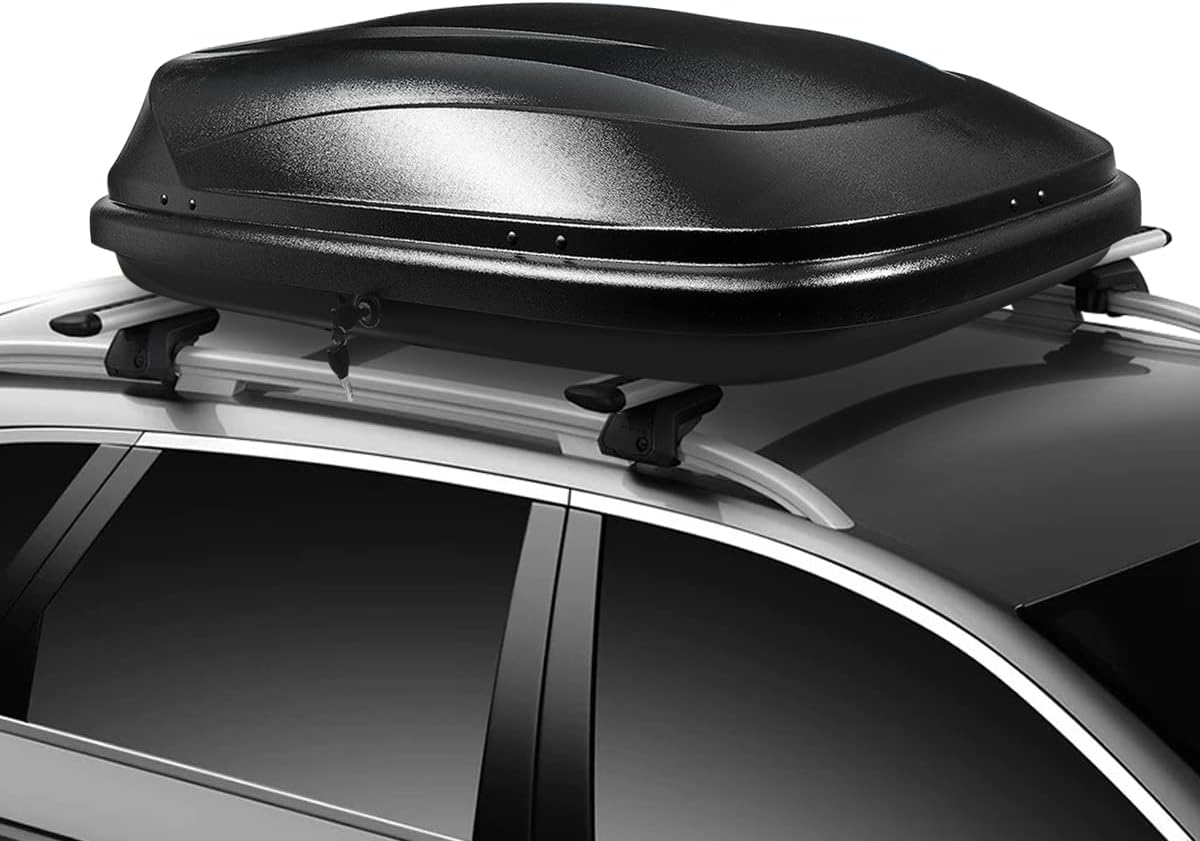
Extra-long 17 cu ft rooftop beast fits Palisades and Santa Fes, offering tool-free installation and dual-side access for bulky cargo. Textured ABS shell withstands weather while 110 lb capacity and low-profile design maximize storage without sacrificing stability.

Thule Motion 3 Rooftop Box
Aerodynamic aluminum cargo box cuts wind drag on IONIQ 5 or Sonata Hybrids, with one-hand operation and torque-indicator mounting. Wing-shaped design boosts fuel efficiency while SlideLock security and 195cm ski capacity make adventures worry-free.

Yakima SkyBox NX XL (Black)
Spacious 18 cu ft hard-shell carrier for Hyundai SUVs features dual-side access and full-metal locks for secure ski/haul storage. Streamlined nano-texture finish reduces noise while 195cm gear capacity fits 4 campers’ worth of equipment.

INNO 320 Cargo Box (Matte Black)
Compact 9 cu ft matte-black box slides forward to clear hatchbacks like the Kona or Venue, with dual-side opening and water-resistant build. Memory Mount system enables 60-second installs while 8-ski capacity maximizes small-roof utility.

INNO Wedge Cargo Box (White)
Low-diffuser 11 cu ft wedge design glides quietly on Elantras or Velosters, using injection-molded PP for extreme durability. Quick-connect hardware and dual-side access simplify loading while 42 lb weight won’t grunt your fuel economy.
Understanding Your Hyundai’s Roof: The Foundation
Okay, first things first. You can’t just slap any box on any roof and call it a day. Let’s break down the essentials you absolutely need to know before browsing boxes. Your Hyundai’s roof type dictates what hardware you need. Most Hyundais come equipped with one of three setups: Fixed Points, Side Rails, or Flush/Naked Rails. Fixed Points are little raised squares or bars near the top of your door frames – super common on models like the Tucson, Santa Fe, Palisade, and Sonata. These require towers that clamp onto them. Side Rails run the length of the roof, parallel to the doors (found on some Santa Fe trims, Palisade, etc.). These often allow towers to clamp directly onto the rail itself. Flush or Naked Rails are sleek, low-profile tracks integrated into the roof (common on IONIQ 5, Sonata Hybrid, Kona Electric). These require towers and crossbars – you need to install the crossbars first, then attach the box to those. Don’t sweat it if this sounds confusing; checking your owner’s manual or popping your head outside to look is the easiest way. Getting this wrong means your expensive box won’t fit securely, or worse, could be unsafe. Off the top of my head, here’s a quick cheat sheet for popular models:

- Hyundai Tucson: Usually Fixed Points. Needs Towers + Crossbars.
- Hyundai Santa Fe (including 2020): Can be Fixed Points or Side Rails depending on trim/year. Check yours! Needs Towers + Crossbars (Fixed Points) or potentially Towers that clamp Side Rails directly.
- Hyundai Palisade: Often Side Rails. Needs Towers designed for Side Rails OR Towers + Crossbars if adding them.
- Hyundai Sonata/Sonata Hybrid: Typically Fixed Points. Needs Towers + Crossbars.
- Hyundai Kona/Kona Electric/Kona N: Fixed Points. Needs Towers + Crossbars.
- Hyundai IONIQ 5: Flush Rails. Definitely needs Towers + Crossbars first.
- Hyundai Santa Cruz: Integrated tracks in the bed rails or roof. Needs specific Towers + Crossbars.
- Hyundai Elantra/Accent/Venue/Veloster: Usually Fixed Points. Needs Towers + Crossbars.
Choosing the Right Crossbars: Your Box’s Best Friend
Hold up! Before you even think about the box itself, you need solid crossbars. They’re the crucial link between your car’s roof and the box. Not all crossbars are created equal, my friend. You need bars specifically designed for your Hyundai’s roof type and model year. Why does this matter? Weight limits and wind noise, for starters. Cheap, generic, or poorly fitted bars can whistle like crazy on the highway – driving you absolutely nuts on a long trip. Worse, they might not handle the combined weight of the box and your gear safely. Look for bars with a weight capacity that comfortably exceeds your planned box load. Aerodynamic designs (like teardrop shapes) significantly cut down on that annoying wind noise. Brands like Thule and Yakima are the old-school pros here, known for precise fit kits. Investing in good bars makes a huge difference in the overall experience – trust me, it’s worth skipping the bargain bin for these. They provide the stable, quiet foundation your roof box deserves. Imagine cruising down the highway, music playing, conversation flowing, without that constant whistling soundtrack? That’s awesome.
Key Roof Box Features: What Actually Matters
Alright, now we get to the fun part: picking the box itself! But with so many options, how do you choose? Forget the marketing fluff; focus on these core features that impact your daily (or adventure) use:
- Alright, let’s cut to the chase – figuring out how big your roof box needs to be is probably the biggest head-scratcher, right? Seriously, how much gear are you actually planning to stuff up there on the regular? Forget fancy jargon; it’s all about those cubic feet (cu ft) numbers. Picture this: Snagging a compact box, say 11 to 14 cu ft (think Thule Pulse size), is totally legit if you mostly need extra suitcases for a couple or ski gear for your Kona or Elantra weekend trips. Stepping up to that mid-size sweet spot, around 15 to 18 cu ft, is where it’s at for Tucson or Santa Fe families – suddenly you’ve got room for both the luggage and those bulky strollers, pack-n-plays, or coolers without breaking a sweat (models like the Thule Force XT L or the popular SportRack Vista XL fit this bill). Now, if you’re rolling in a Palisade or gearing up for a seriously extended camping adventure where you need everything, 19+ cu ft beasts like the Thule Motion XT XL or Yakima SkyBox become your best buddies. But hold up – bigger absolutely ain’t always better, friend. Slapping a monster box onto your sleek Elantra or nimble Kona? Not only does it look kinda ridiculous, but it’ll guzzle way more gas and might just be total overkill for what you actually haul. Here’s the kicker lots of folks miss: Check that INTERIOR LENGTH! Seriously, what good is a box if your 185cm+ skis, snowboard, or fishing rods smack into the ends because it tapers too much inside? The outside might look long, but the usable space inside is what counts. Don’t get stuck forcing gear in – measure what you carry and make sure the box truly fits.
- Shape & Aerodynamics: Who honestly enjoys throwing cash out the window at the pump every time you hit the highway? Exactly. That’s where picking a sleek, low-profile roof box – think models like the Yakima RocketBox Pro or those slick INNO designs – makes a world of difference compared to clunky, square ones. These smoother shapes glide through the air way better, cutting down on that awful whistling or roaring noise that can drive you nuts on long drives. For real, the difference in cabin peace is night and day. But here’s the real kicker: that aerodynamic profile puts way less grunt on your Hyundai’s engine, meaning significantly better fuel economy trip after trip. That’s legit money staying in your wallet. And if you’re cruising in a Sonata Hybrid, Kona Electric, or IONIQ 5? Every single mile of range feels precious. A box that fights the wind less means you squeeze out more miles per charge or tank – a total win. Nice try pretending the shape is just about looks; it’s seriously about saving you hassle, noise headaches, and a noticeable chunk of cash over time. Why battle the wind when you can just glide?
- Opening Mechanism: Ever tried loading a roof box in a crowded parking lot in the rain? You need easy access. Dual-sided opening (both driver and passenger side) is a massive convenience, especially on wider vehicles like the Palisade or Santa Fe. Consider how the lid opens – does it lift high enough for easy loading without you needing a stepladder? Does it have gas struts to hold it open reliably? Struggling with a heavy, awkward lid sucks the fun out of packing quickly.
- Security & Ease of Use: You want your gear safe and the box simple to manage. Look for robust locking systems – many use your existing car key (integrated locks) or come with dedicated keys. Double-check the latch mechanism feels secure and isn’t flimsy. How easy is it to install and remove? Some boxes feature tool-free mounting systems that clamp onto your crossbars in minutes (Thule’s Quick-Grip, Yakima’s SKS Locks). This is golden if you only need the box seasonally. No one wants to spend an hour wrestling with tools every time.
- Build Quality & Materials: Let’s be real: your roof box isn’t chilling in a garage – it’s taking a beating like a champ. Think about it: blistering sun baking it daily, torrential rain soaking it, maybe snow piling up, plus all that road grime and highway wind trying to rip it off at 70+ mph. That’s legit intense! So yeah, how tough it’s built is a massive deal. You’ll mostly find boxes made from ABS plastic – it’s the sturdy, go-to choice for most brands, balancing toughness and cost. If you’re eyeing something fancier and lighter, fiberglass is the premium route, giving you that sleek finish (but often with a heftier price tag). On the budget end, HDPE is super durable plastic, common in value picks like many SportRack models. Here’s a pro tip: if you can actually see the box in person, give it a poke! Does the material feel thick and solid, like it can handle a knock, or kinda thin and brittle? How annoying would that be to see cracks after one season? And don’t sleep on UV protection – quality boxes have it baked in to fight fading and keep the plastic from turning brittle and cracking years down the road. You’re dropping cash on this thing; you want it surviving countless road trips, ski seasons, and Costco hauls, not crumbling after a few summer outings. It’s about protecting your gear and your investment, no big deal.
Matching the Perfect Box to Your Specific Hyundai
Let’s get personal. Your specific Hyundai model has unique contours, roof lengths, and sometimes challenges. Choosing a box that complements it ensures better looks, performance, and usability. Here’s the scoop for popular models:

- Hyundai Tucson: Super popular SUV! Fixed points mean towers + crossbars. Its roof is a good size for mid-range boxes (15-18 cu ft). The Thule Force XT L is a fantastic all-rounder, offering great capacity without overwhelming the Tucson’s profile. Need more space? The SportRack Vista XL offers big bang for the buck. Want sleek? The INNO Wedge or Yakima RocketBox Pro look sharp. Avoid overly long boxes that extend way past the windshield or rear window.
- Hyundai Santa Fe (Including 2020 Santa Fe): Spacious family hauler. Roof setup varies – check for fixed points or side rails. You can comfortably go larger here (17-21 cu ft). The Thule Motion XT XL blends massive capacity with good looks and aerodynamics. The Yakima SkyBox Carbonite 18 is another excellent high-capacity choice. For a budget-friendly workhorse, the SportRack Vista XL is worth a serious look. The longer roof handles bigger boxes well, maximizing your storage potential.
- Hyundai Palisade: The big boss of the Hyundai SUV lineup! Usually has side rails. This vehicle can handle the largest boxes with ease (18-22 cu ft+). Thule Motion XT XXL or the massive Yakima SkyBox 21 Carbonite are top contenders. Seriously, you can fit an insane amount up top. Even with a full cabin, the Palisade + big roof box equals ultimate road trip readiness. The Menabo Diamond offers a unique, super-sleek profile if you prioritize looks and aero.
- Hyundai Kona / Kona Electric / Kona N: Compact and sporty. Fixed points require towers + crossbars. Don’t go too big! A box around 11-15 cu ft (like Thule Pulse Alpine, Force XT S/M, Yakima SkyBox Lo, or INNO Shadow 13) keeps proportions in check and minimizes range impact, especially crucial for the Kona Electric. The sporty Kona N deserves something sleek like the Yakima RocketBox Pro 11. Overloading a small roof looks awkward and hurts efficiency.
- Hyundai Sonata / Sonata Hybrid: Sleek sedans. Fixed points require towers + crossbars. Prioritize low-profile, aerodynamic boxes (11-16 cu ft) to maintain the car’s lines and fuel efficiency (vital for the Hybrid!). The Yakima RocketBox series is practically made for sedans. The Thule Motion XT Alpine or Force XT S are also great streamlined choices. Avoid tall, bulky boxes that ruin the sedan’s profile.
- Hyundai IONIQ 5: The futuristic EV star. Flush rails definitely require towers + crossbars. Aerodynamics and weight are CRITICAL here to protect your driving range. Choose a sleek, low-drag box specifically designed for EVs or with excellent aero (like the INNO INA445, Thule Vector Alpine, or Yakima SkyBox Lo Carbonite). Keep capacity reasonable (12-16 cu ft max). Every bit of efficiency counts when you’re relying on battery power.
- Hyundai Santa Cruz: The adventurous crossover truck! Unique setup with potential mounting points on the roof or within the bed rails. Requires specific crossbars designed for the Santa Cruz. Mid-size boxes (14-18 cu ft) like the Thule Force XT L or Yakima SkyBox 16 work well. The bed rail option might be preferable for some to keep weight lower. Confirm compatibility carefully – its unique design needs specific hardware.
- Hyundai Elantra / Accent / Venue / Veloster: Smaller vehicles (Veloster being the sporty oddball). Fixed points mean towers + crossbars. Stick to smaller boxes (11-14 cu ft max) like the Thule Pulse M, SportRack Horizon 11, or INNO Shadow 13. Overloading these smaller roofs is a no-go for safety and handling. The Veloster’s unique shape needs careful box positioning to avoid blocking the hatch.
Beyond the Big Brands: Exploring Solid Options
Okay, Thule and Yakima are the big names, but are they your only choices? No way! Several other brands offer compelling options, often at different price points. Let’s give them some love:
- INNO: Seriously, check out INNO. Japanese engineering focused on superb aerodynamics and quiet operation. Their Wedge and Shadow models are incredibly sleek and integrate beautifully with many Hyundai rooflines. They often punch above their weight in terms of quietness and fuel efficiency impact. If drone on the highway drives you nuts, INNO is worth a premium. Find out more about their innovative designs in our dedicated INNO Rooftop Cargo Boxes review.
- SportRack: Budget conscious? SportRack is legit. Owned by Thule but offering more wallet-friendly options like the Horizon and Vista series. The SportRack Vista XL is a perennial favorite for offering massive capacity without the massive price tag. Build quality is generally good for the price, though maybe not quite as refined as the top tier. Don’t need bells and whistles, just space? This could be your jam. See how the popular SportRack Vista XL stacks up in comparisons.
- JEGS / TUFFIOM: Looking for a super affordable, no-frills carrier? Brands like JEGS and TUFFIOM offer basic, hard-shell cargo boxes at entry-level prices. They get the job done for occasional use. Manage expectations: They might be noisier, less aerodynamic, and the plastic might feel thinner than premium brands. But if you only need a box once or twice a year, they can be a practical solution. Understand the differences in our Tuffiom vs JEGS comparison. Explore the features of the JEGS Rooftop Cargo Carrier.
- Menabo: Want head-turning style? Italian-designed Menabo boxes, like the Diamond, are known for their distinctive, sculpted looks and high-quality finish. They offer excellent aerodynamics too. If making a style statement is as important as storage, Menabo is a contender, though often at a premium price point. Discover the sleek design of the Menabo Diamond Cargo Box.
Installation, Loading, and Driving Smarts
Got your box? Awesome! Now let’s get it on your Hyundai safely and use it like a pro. Installation seems daunting, but it’s usually straightforward. Follow the instructions meticulously! Most modern boxes use a clamp system that attaches directly to your crossbars. Key steps involve:
- Positioning the box centrally on the crossbars.
- Measuring the distance from the front crossbar to the front of the box (often specified in the manual for optimal aero).
- Tightening the clamps securely using the provided tool (usually a torque wrench – use it! Overtightening can damage bars/box, undertightening is dangerous).
- Double-checking all clamps and locks before driving. Give the box a firm shake – it shouldn’t move independently of the car.
Loading it right matters more than you think. Distribute weight evenly side-to-side. Place heavier items towards the bottom and centered front-to-back over the crossbars. This keeps your Hyundai’s handling stable. Lighter, bulkier stuff can go on top. Avoid overloading one end. Respect the weight limit! This includes the weight of the box itself plus your gear. Exceeding it stresses your roof, crossbars, and is unsafe. What’s the max? Check your Hyundai owner’s manual for the vehicle’s roof load limit (often 50kg to 75kg / 110lbs to 165lbs total for the whole rack system, including bars, box, and contents). Then check your crossbar weight limit, and finally your box weight limit. Your actual cargo limit is the lowest of these three numbers. Ignoring this is playing with fire.

Driving with a roof box changes things slightly. You’ll notice it’s there! Expect slightly slower acceleration and longer braking distances. Allow more room. Be mindful of height – drive-thrus, parking garages, and low branches become hazards! Write down your new total vehicle height (car + crossbars + box) and stick it on your dash as a reminder. Cornering: Take curves a bit more gently. Wind noise: Even aerodynamic boxes add some; it’s normal. Fuel Economy: Expect a 5-25% decrease in MPG depending on box size, shape, car, and speed. Sticking closer to the speed limit helps minimize this hit.
Real Talk: Budget, Buying Used, and Long-Term Care
Let’s talk cash. Roof boxes range wildly from under $300 for basic models to well over $1500 for top-tier, large capacity boxes. Where does that leave you? Setting a realistic budget is step one. Consider how often you’ll use it. If it’s only for one big trip a year, renting might be smarter (many outdoor stores offer this). If you adventure frequently, buying makes sense. Don’t forget the cost of crossbars! Factor those into your total budget.
Thinking about grabbing a used roof box to save some cash? Fair enough – it’s totally a smart move if you know what to look for. You can uncover legit deals scrolling through Facebook Marketplace, browsing Craigslist listings, or checking out eBay auctions. But hold up – don’t just jump on the first cheap one you see! You gotta play detective. Get hands-on: check every inch for nasty cracks, especially where it clamps onto your car or at stress points like corners – those are major red flags. Deep scratches aren’t just ugly; they can actually weaken the plastic over time. Peek inside for mold, funky smells, or serious damage you missed. Sun damage sucks too – look for faded, brittle, or chalky spots feeling flimsy. How annoying would it be to get it home only to find the keys missing, clamps gone, or crucial parts busted? Make sure the whole kit is there before you hand over any dough.
Playing it safe is non-negotiable, folks. Always, always arrange to meet the seller face-to-face in a bright, public spot – like a busy coffee shop parking lot in broad daylight. How risky is it meeting some random stranger alone at night? Not worth it. Give that box a solid once-over right there. Press on potential weak spots, open and close the latches, inspect the seals. A box priced at a tempting $100 might seem like a steal, but if it’s hiding a crack near the mounts? That’s not a bargain; it’s a genuine hazard waiting to fail at highway speeds. Minor cosmetic scuffs? No big deal. Structural flaws or missing security parts? Nice try, but walk away. Protecting your gear and your safety is way more important than scoring the absolute lowest price. Trust your gut – if something feels off, it probably is.
Want that roof box to survive seasons of sun, salt, and highway grime without cracking or fading? Legit – a tiny bit of TLC goes a long way. Give it a bath every now and then with simple soapy water to blast off road dirt, bird poop, or tree gunk – skip the harsh cleaners that can eat away at the plastic or seals. Here’s the real secret sauce: When you’re not using it, get it out of direct sunlight, no joke. That sun absolutely murders plastic over time, turning it chalky and fragile. Stash it in your garage, shed, or even a shady corner – anywhere cool and dry beats baking on your car roof or leaning against a sun-drenched wall. Stuck storing it outside? No big deal, just toss a sturdy tarp or a proper protective cover over it. Oh, and those locks? Don’t let them get stiff and cranky on you. A quick dab of graphite powder (seriously, not oil – oil just gums things up with dirt) once or twice a year keeps them clicking smooth. How annoying is that sticky lock when you’re rushing to unpack? Spending five minutes here and there saves you from faded colors, surprise cracks, and locks that fight you – keeping your gear safe and your investment solid for years of adventures. Minor effort, major payoff.
Making the Final Choice & Where to Buy
Alright, feeling a bit swamped by all this roof box info? Totally normal – breathe deep, you’ve already nailed the big stuff. By now, you’re clued up on your Hyundai’s specific roof setup (fixed points, rails, whatever!), you’ve got a solid handle on how much space you actually need, you know which features make or break it for you, and you’ve got a realistic budget number in mind. Seriously, that’s most of the battle right there! Time to zero in. Flip back to those recommendations tailored for your exact Tucson, Santa Fe, Kona, IONIQ 5, or whatever Hyundai beast you drive – they’re your shortcut. But here’s the real pro move: Don’t just take our word (or the manufacturer’s shiny brochure!) as gospel. Dig into legit, detailed reviews written by folks who actually used the box on a car like yours. How many times have specs looked great on paper but reality was a noisy, fiddly mess? For real? Pay super close attention when reviewers mention stuff like annoying wind whistle on the highway, whether the install made them want to pull their hair out, or if the plastic started looking faded and brittle after just one season. That’s the gold – real-world experiences tell you what those glossy ads won’t. Skip the hype, find the truth from people who’ve been exactly where you are now. You got this.
Where to buy? You have options:
- Specialty Rack Shops: Often offer expert advice and installation. Great for peace of mind.
- Major Outdoor Retailers: REI, Bass Pro Shops, Cabela’s usually have good selections and return policies.
- Online Retailers: Amazon, eTrailer offer vast selection and convenience. Double-check compatibility!
- Direct from Manufacturer: Thule, Yakima, etc., often have sales on their websites.
- Used Markets: As mentioned, can yield significant savings if you inspect carefully.
Conclusion: Unlock Your Hyundai’s True Potential
Seriously, how many times have you wrestled with a trunk that just won’t cooperate, forcing you to leave gear behind or cram passengers in like sardines? Adding a rooftop carrier to your Tucson, Santa Fe, Palisade, Kona, Sonata, IONIQ 5, or whatever Hyundai you roll in is legit one of the most practical moves you can make. It’s a total game-changer for freeing up your cabin. Imagine finally ditching that stressful ritual of shoving bags into every crevice before a trip. Picture ski weekends where every single piece of equipment fits without a fight, camping adventures where you actually bring the nice chairs and big cooler, or just conquering that massive Costco haul without sacrificing your passenger’s legroom. No more compromises, no more “sorry, it won’t fit” moments. You unlock real space, letting everyone breathe easy and actually enjoy the ride. How awesome would it be to hit the road knowing you packed everything you wanted, exactly how you wanted it? That cramped chaos? Forget it – this is how you travel smart.
Ready to ditch the Tetris game and reclaim your space? You’re now armed with all the knowledge to choose the perfect rooftop cargo box for your specific Hyundai. Remember the essentials: know your roof, get good crossbars, prioritize features that matter to you (size, aero, ease of use), match the box to your model, install it right, load it smart, and drive mindfully. It’s a long shot that one box is perfect for everyone, but there’s absolutely an ideal match for you and your Hyundai out there. Do your research, check out those reviews, and get ready to experience the freedom of truly ample cargo space. Catch you later on the open road – hopefully with way more gear and way less stress! Take it easy and happy hauling!
Essential Hyundai Roof Box Specs At A Glance
Feature | What It Means For You | Why It Matters |
|---|---|---|
Capacity (cu ft) | The interior volume of the box. Ranges from small (~11 cu ft) to XXL (~22 cu ft+). | Determines how much you can realistically carry. Match this to your typical hauling needs & Hyundai size. |
Interior Length | The actual usable length inside the box (often less than external length due to tapered ends). | Crucial for carrying long items like skis, snowboards, fishing rods, or tents. Always check this spec! |
Weight Limit (lbs) | The MAX weight the box itself can hold (gear + box weight). DO NOT EXCEED. | Safety first! Combined with car roof limit & crossbar limit, this is non-negotiable. |
Box Weight (lbs) | How heavy the empty box is. | Impacts fuel economy slightly and ease of handling when installing/removing. Lighter is usually better. |
Opening Type | Single-side (driver or passenger) vs. Dual-side (both sides). | Dual-side offers major convenience for loading from either side of the vehicle, especially on wider SUVs. |
Locking System | Integrated locks (use your car key) or dedicated keys. | Security for your gear. Integrated locks are super convenient. |
Mount System | How it clamps to crossbars (e.g., Thule Quick-Grip, Yakima SKS Locks). | Impacts ease and speed of installation/removal. Tool-free systems are a big plus. |
Material | Usually ABS Plastic (common), HDPE (durable, budget), Fiberglass (premium, smooth). | Affects durability, weight, noise, and cost. ABS is the standard balanced choice for most. |
Aero Profile | How streamlined the box is (low-profile, tapered ends). | Directly impacts wind noise and fuel economy. Essential for EVs/hybrids (IONIQ 5, Kona Electric, Sonata Hybrid) and comfortable highway driving. |

Our team is creating outdoor-gear relevant articles with passion. If our articles can help you to find the correct solutions for your questions, we will be happy about that. In the content creation process, we usually collect accurate and useful information online or offline to compile our content in an organized way. Consequently, we can guarantee that you can discover some expected answers to your questions. We appreciate your time on our site.