What’s up, bike adventurers? So, you’re eyeballing Thule roof racks, specifically the ProRide XT and the FastRide? Awesome choice! Thule’s legit in the rack game, no doubt. But man, choosing between these two can feel like picking your favorite trail – they’re both awesome, just different vibes. How’s it going with your decision process? Feeling a bit overwhelmed by the specs? Totally get it. We’re gonna break down everything you need to know about the ProRide XT and the FastRide, way beyond just the basic numbers. Think real-life loading, security feels, and which one actually fits your bike and your style. Let’s dive in and figure out which Thule roof warrior deserves a spot on top of your ride!
Okay, Let’s Get the Basics Straight
Meet the Contenders: ProRide XT & FastRide
Alright, before we get into the nitty-gritty, let’s properly introduce these two. Knowing what they are fundamentally helps you understand how they work best for you. It’s like understanding the difference between a trail bike and a downhill rig – both carry your bike, but the approach is different.
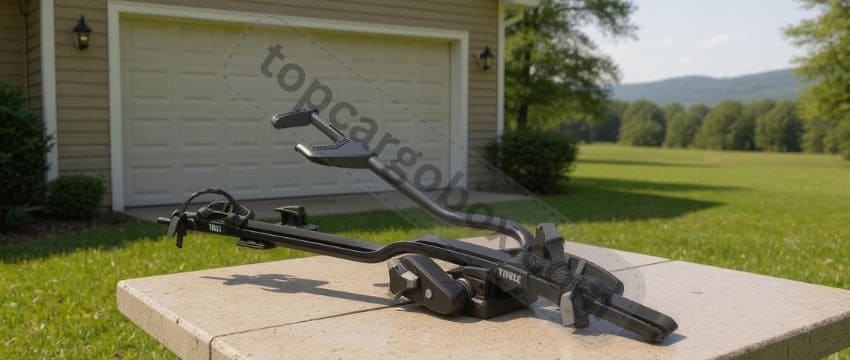
Thule ProRide XT
Detail
This frame-hugging champ grabs your bike with wheels on – just drop the front wheel into its tray, clamp the padded arm over your frame, and twist the torque dial until it clicks. It spreads pressure across frame tubes with soft claws, protecting paint while locking down mountain, hybrid, or e-bikes (up to 44 lbs) without fuss. Perfect if you hate removing wheels or haul burly rides regularly.
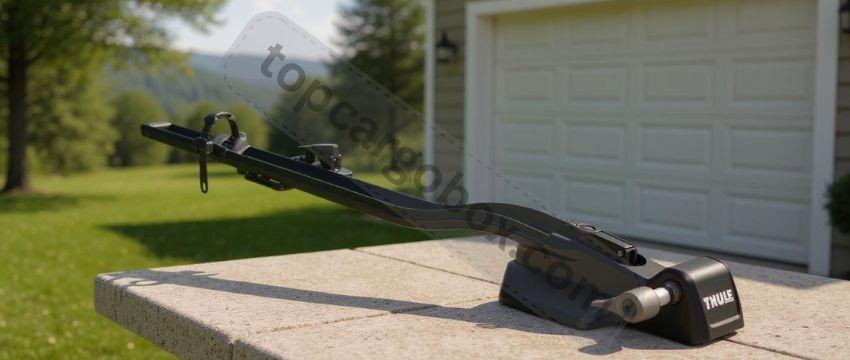
Thule FastRide
Detail
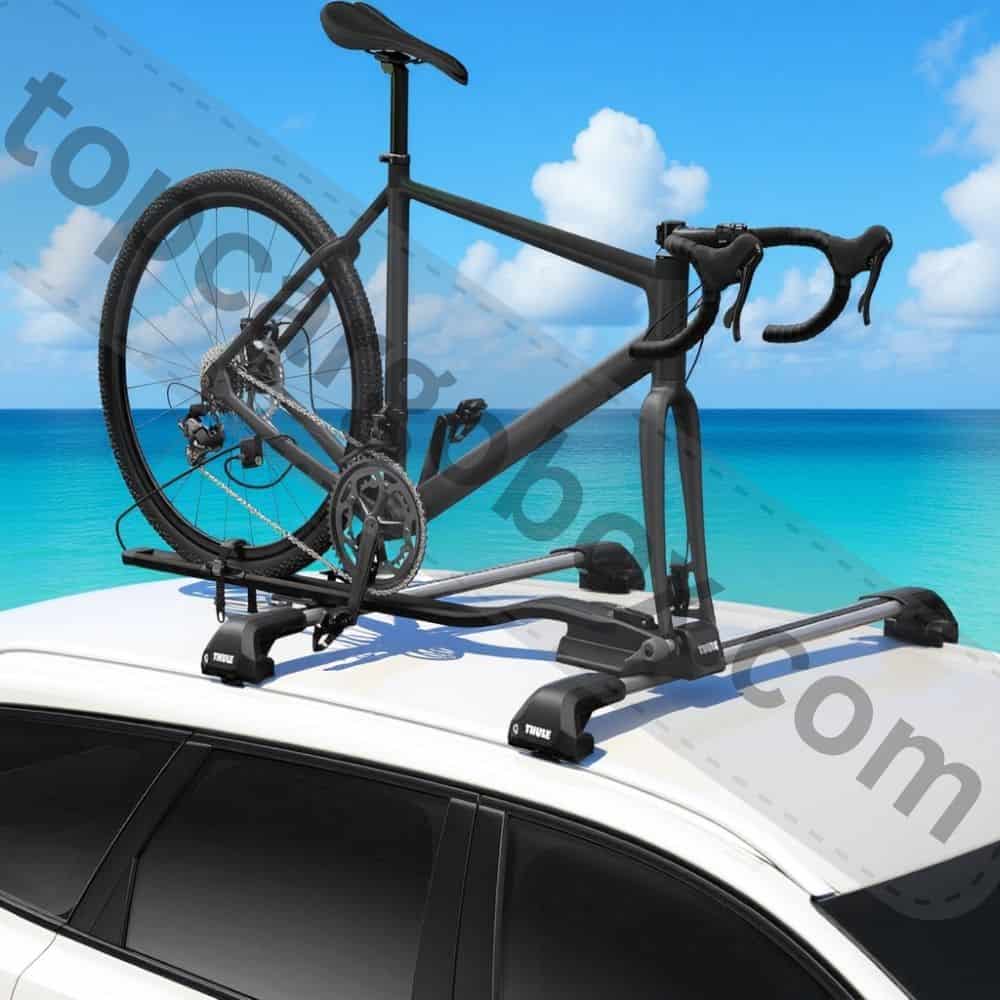
Built for speed demons, this fork-mount rack requires popping off your front wheel before securing the fork directly to its tray with a click-confirmed AcuTight knob. Its zero-frame-contact design protects carbon or delicate bikes, while the integrated cable locks wheels and frame simultaneously (locks sold separately). Ideal for road/gravel riders prioritizing aerodynamics and fork-level security, though thru-axle bikes need adapters.
Thule ProRide XT: The Frame-Hugging Workhorse
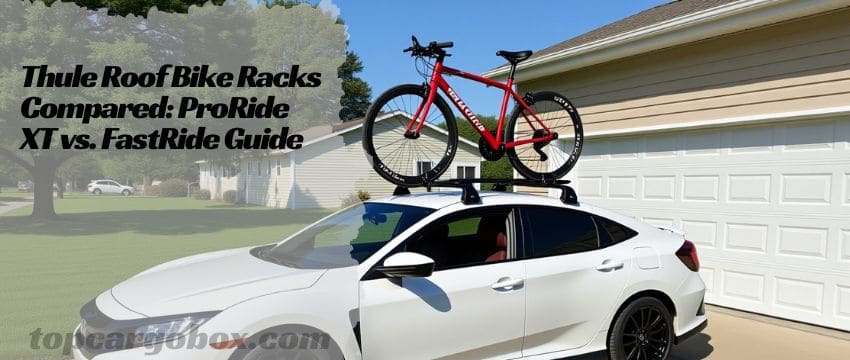
Picture this: You roll up to the trailhead, maybe a bit muddy, maybe a bit tired. You just want to grab your bike and go. The ProRide XT is kinda built for that moment. It’s what Thule calls an “upright” rack. What does that mean? Instead of clamping onto your fork, it grabs onto your bike’s frame tubes (the top tube and seat tube, usually) and also secures both wheels. It’s like giving your bike a secure bear hug from the side. This design is super popular, especially for mountain bikers, commuters, or anyone who just doesn’t want to mess with taking their front wheel off. Its whole vibe is “grab and go.” The claw arms adjust to fit different frame shapes and sizes, and those big, soft pads? They’re there to spread the pressure and keep your paint job looking fresh. Plus, weighing in at 11 pounds and holding up to 44 pounds, it’s sturdy enough for most bikes, even beefier e-MTBs. It’s definitely the more “old school” of the two in terms of mounting style, but Thule’s added some seriously smart modern touches we’ll get into.
Thule FastRide: The Sleek Fork Specialist
Now, imagine this: You’re heading out for a fast road ride or maybe hitting the gravel. Your bike likely has a quick-release or thru-axle front wheel. The FastRide is designed specifically for this scenario. It’s a fork-mounted rack. This means you take your front wheel off, mount the fork directly onto the rack’s tray using the axle (either quick-release skewer or a compatible thru-axle adapter), and then secure the rear wheel with a strap. Think of it like your bike is standing on its own two feet (well, fork and rear wheel) on the roof. It’s super sleek, super low-profile, and weighs just 7.3 pounds with a 40-pound capacity. The FastRide screams efficiency and aerodynamic stability, especially appealing if you’ve got a carbon road bike or value that super-secure, direct connection to the fork. It feels more “racy” and precise. It fits standard quick-release forks out of the box, and with specific adapters (sold separately, grunt!), it handles a wide range of thru-axle sizes. If you’re cool with popping off the front wheel, this might be your speed.
Here’s a quick glance at their core specs:
Feature | Thule ProRide XT | Thule FastRide |
|---|---|---|
Mounting Type | Frame Mount (Upright) | Fork Mount |
Secures | Frame Tubes + Both Wheels | Fork + Rear Wheel |
Key Mechanism | Adjustable Claw Arms | Fork Tray + Thru-Axle Adapters |
Load Capacity | 44 pounds | 40 pounds |
Item Weight | 11 pounds | 7.3 pounds |
Front Wheel | Stays On | Must Be Removed |
Frame Contact | Yes (Padded Claws) | No (Only Fork Contact) |
Primary Focus | Convenience, Frame Protection | Aerodynamics, Precision Mounting |
Best For… | MTB, Commuters, Quick Loading | Road/Gravel, Thru-Axle Bikes |
The Mounting Showdown: Frame Hug vs. Fork Lock
This is where the rubber meets the road, or rather, where your bike meets your roof! How you actually get your bike up there is arguably the biggest difference between these racks. It directly impacts your loading experience, your bike’s security, and even what kind of bike you can carry. So, which style clicks with your routine?
ProRide XT: The Grab-and-Go Champion
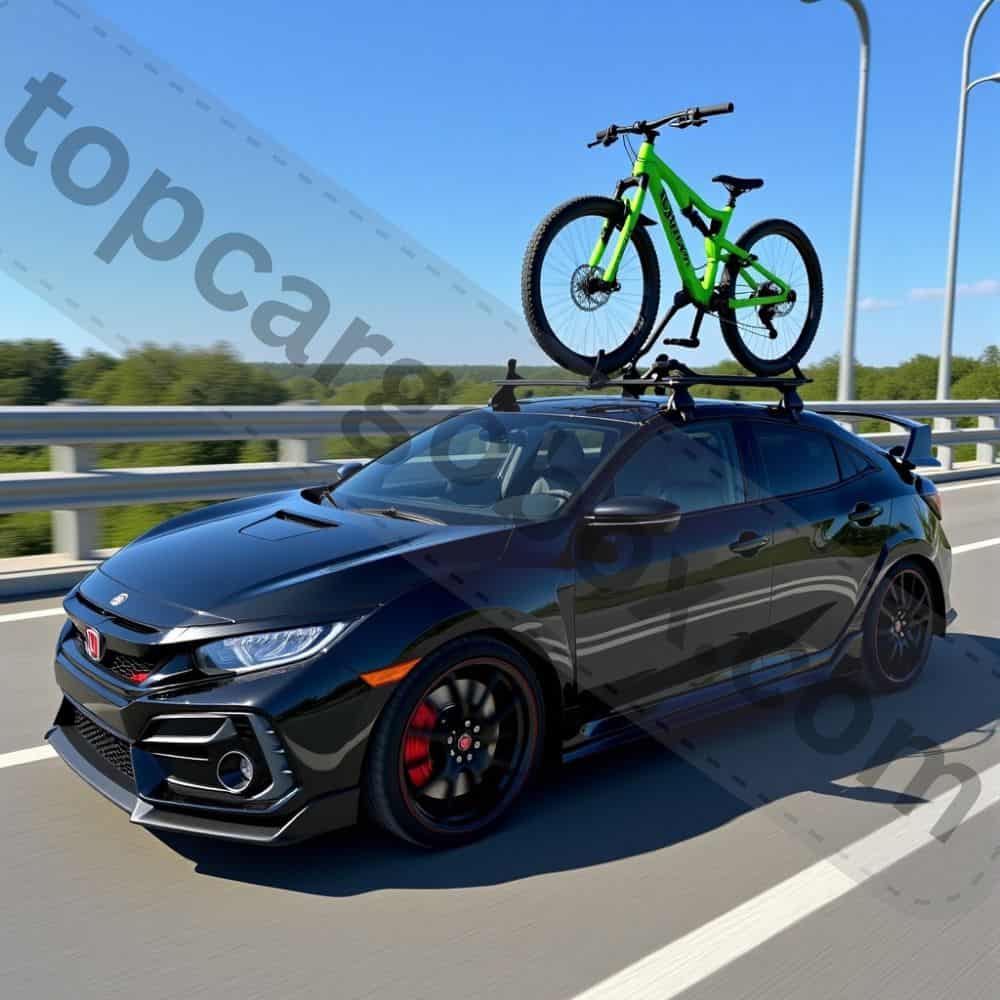
Ever tried squeezing your mountain bike onto a roof rack in a crowded trailhead parking lot? Or maybe it’s pouring rain and you just want to load up fast? That’s where the ProRide XT shines. Its whole design screams convenience. You keep BOTH wheels on your bike. How awesome is that? Seriously, no fumbling with a quick-release lever or trying not to drop your greasy axle in the dirt. You just lift your bike (whole!), position the front wheel into its tray, and then pull down the main arm. Here’s the cool part: Thule’s Ergonomic Design means the frame holder and wheel tray automatically position your bike as you secure it. It kinda guides the bike into place – less wrestling, more smooth action. Then you turn the Torque Limiter Dial. This little genius feature controls the clamping force. You turn it until it gives you a clear sign (usually a click or a visual indicator) that it’s tight enough – safe and secure, but not so tight you crush your frame. The large, soft claw pads spread the pressure, minimizing the risk of scratching or denting your frame tubes. That lower jaw on the claw? It’s specifically there to prevent the bike from swinging down or falling out if you accidentally bump it during loading. It’s a solid, confidence-inspiring system. For families or people carrying multiple bikes, this style can be significantly faster and less fiddly than dealing with wheels off. If quick loading with minimal steps is your jam, the ProRide XT is legit.
FastRide: Precision for the Performance Crowd
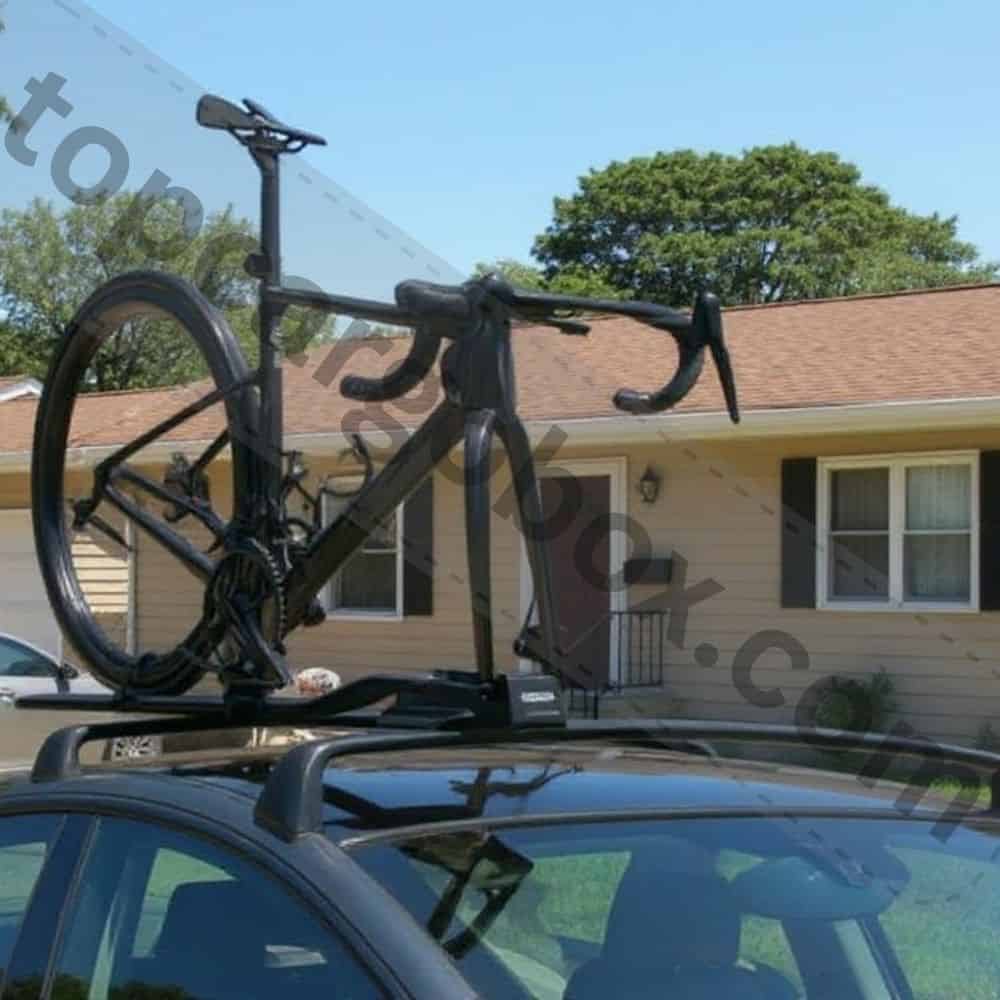
Okay, so you don’t mind taking the front wheel off? Maybe you even prefer it? Then the FastRide’s approach might feel more natural, especially if you come from a road or gravel background where fork mounts are common. The process is precise: Remove your front wheel. Lift your bike frame. Slide your fork’s axle mounts (the “dropouts”) onto the rack’s fork tray pins. Secure it using either your bike’s existing quick-release skewer or the appropriate thru-axle adapter. This is where the Thule AcuTight knob comes in. You tighten this knob, and it clicks audibly when it reaches the optimal torque – letting you know it’s secure without over-tightening. This is super important, especially if you have a carbon fork! Over-tightening can cause serious damage, and that click is a major peace-of-mind feature. Once the fork is locked down, you secure the rear wheel using an adjustable strap. The big win here? Zero frame contact. The rack only touches your fork and rear wheel. For bikes with complex frame shapes, carbon frames you’re super protective of, or frames with lots of cables/hoses that might get snagged, this can be a huge advantage. It also creates a super sleek, low-drag profile on the roof. If you value that direct, no-frame-contact security and don’t mind the extra step of wheel removal, the FastRide feels engineered and precise.
Locking It Down: Keeping Your Bike Safe
Let’s be real for a second: one of the biggest worries with any bike rack is security. You’re literally putting your expensive bike on display on top of your car. That sinking feeling when you leave your bike for a quick coffee stop? Yeah, we’ve all been there. Both Thule racks offer security, but the approach is slightly different. How do they stack up for giving you peace of mind?
Security Features on the ProRide XT
The ProRide XT is built tough, and its security starts with its frame grip. Those claw arms holding your frame and the lower jaw preventing drop-downs make it physically harder for someone to just yank the bike out quickly. But, you need to add locks. Thule uses their “One Key” system. This means you can buy locks (sold separately, bummer, I know) that use the same key for everything. You’ll typically need: One lock cylinder to secure the main clamping arm to the rack itself (so someone can’t just release the bike), and cables or a lock to physically secure the bike frame to the rack. Often, this involves looping a cable through your bike frame and locking it to the rack base. There’s usually also an option to lock the entire rack base to your roof bars. It’s effective, but it involves multiple components you need to buy and manage. The upside? The robust frame grip combined with good locks makes it a pretty daunting prospect for a thief. You can feel pretty confident leaving your rig for a reasonable amount of time, especially in decent areas. Just remember, no lock is 100% theft-proof, but Thule’s stuff is definitely top-tier deterrent.
FastRide’s Integrated Security Approach
The FastRide takes a slightly more streamlined path to security, which is kinda cool. Its core security revolves around locking the fork directly to the rack tray. Again, you need the separate lock cores (Thule One Key system), but once you have them, it’s integrated. A key feature is the steel cable tucked into the wheel tray. When you mount your bike, you pull this cable out, weave it through your bike’s front wheel and frame triangle, and then lock it back into the rack body. This simultaneously locks your bike to the rack and secures the front wheel. Since the fork is already locked down via the axle clamp (which is also locked with its own core), it creates a very secure point. You then secure the rear wheel with its strap, but that strap itself isn’t typically lockable – though the cable might reach it depending on your frame. Like the ProRide, you can also lock the rack base to your roof bars. The big win is the direct fork lock plus the integrated cable. It feels very clean and provides solid security focused on the most critical connection point – where the bike attaches to the rack. Less fiddling with separate cables compared to some frame rack setups. Pretty slick.
Everyday Use: Convenience & Compatibility
Alright, specs are one thing, but how do these racks actually feel to live with day in and day out? Loading bikes can be a chore, especially after a long ride. You want something that doesn’t make you dread the process. You also need to know it’ll actually fit your car and your bikes! Let’s talk real-world usability.
ProRide XT: User-Friendly for Diverse Bikes
The ProRide XT’s biggest daily driver advantage is sheer simplicity for loading most bike types. Keeping both wheels on is a massive time-saver and eliminates the hassle of storing a loose wheel inside your car or worrying about a greasy axle. The auto-positioning feature genuinely works. Lift the bike, get the front wheel roughly in the tray, pull down the arm, and it guides the bike into the right spot. That torque limiter dial? Huge. It removes the guesswork and fear of over-tightening. Just turn until it clicks. Done. Switching the rack from the driver’s side to the passenger side is also tool-free and relatively simple, which is great if you need to adjust for garage clearance or different loading scenarios. Compatibility is super broad: It mounts to all Thule roof systems (like Aeroblades and Squarebars) and most factory roof racks (OEM racks). It handles mountain bikes with wide tires, step-through frames, kids bikes, and e-bikes within its 44-pound limit with ease. The main daily consideration is the height. You are lifting the entire bike onto the roof. If you drive a tall SUV or truck, or if you’re not super tall yourself, this can be a legitimate workout, especially with heavier bikes. But once it’s up there, the actual securing process is quick and intuitive. No big deal once you get the hang of it.
FastRide: Efficiency with a Specific Flow
The FastRide rewards a bit more precision but offers a super clean result. The loading process is very defined: Remove front wheel, mount fork, tighten AcuTight knob until click, secure rear wheel strap. The AcuTight knob is the star here, providing that clear, safe signal for carbon fork owners. Converting the rack from left to right side is also designed to be easy. Where the FastRide shines daily is its sleekness and the security of direct fork mounting. It feels incredibly solid once locked in. Compatibility has a nuance: While it mounts to the same Thule and most factory bars as the ProRide, bike compatibility depends heavily on your fork axle type.
- Quick-Release (QR): Plug and play. Easy.
- Thru-Axle (TA): You must buy the specific Thule adapter for your axle size (e.g., 12x100mm, 15x110mm). These adapters work great, but they are an extra cost and something else to manage/lose. Forgot your adapter? You’re not mounting your bike. The rack itself only handles QR out of the box. It also accommodates disc brakes no problem. Weight-wise, lifting just the frame (minus the front wheel) onto the roof is noticeably easier than lifting a whole bike, especially a heavy one. That 7.3-pound rack weight also makes handling it off the car a breeze. If your main bikes are QR or you’re willing to invest in and manage the TA adapters, the FastRide offers a very efficient, low-drag, and secure daily routine. It’s less ideal for bikes where removing the front wheel is difficult or where you simply prefer not to.
Which One Fits YOUR Ride (and Life)?
Okay, we’ve dissected the hows and whys. Now comes the big question: which Thule roof rack is actually the right partner for you? It’s not just about the rack; it’s about your bike, your car, your habits, and even your strength. Let’s matchmake!
H3: When the ProRide XT Might Be Your Perfect Match
- “I hate taking my front wheel off!” If the thought of dealing with a QR skewer or thru-axle every time you load fills you with dread, the ProRide XT is your solution. Keep those wheels on!
- Mountain Biker Life: You’ve got a burly MTB, maybe with a dropper post and wide tires? The ProRide XT handles the bulk and complex shapes effortlessly. No adapter needed.
- Commuter/E-Bike Hauler: Need to get a heavier commuter bike or an e-MTB (under 44 pounds) to the trails or work? The frame grip and higher weight capacity are ideal. Check out solutions for heavy e-bikes if you need even more capacity, but the ProRide handles many.
- Multiple Bike Types/Family Use: Carrying different bikes (kids, spouse, hybrid, MTB)? The universal frame fit means less fiddling with settings or adapters between bikes. Just lift and clamp.
- Value Simplicity & Speed: You prioritize the fastest, most straightforward loading process possible, especially after a tiring ride. Grab, lift, position, clamp, click. Done.
- Drive a Lower Car: Lifting a whole bike onto a sedan or wagon roof is significantly easier than onto a lifted truck or large SUV.
When the FastRide Could Be Your Soulmate
- Roadie / Gravel Grinder: You live for speed and have a quick-release or thru-axle bike. The direct fork mount is the gold standard for security and aerodynamics in this world.
- “Don’t Touch My Frame!” Enthusiast: You have a pristine carbon frame, a bike with vulnerable paint, or tons of cables/hoses. The FastRide’s zero-frame-contact design eliminates that worry entirely.
- Thru-Axle User (Willing to Adapt): Your modern bike has a thru-axle? As long as you buy (and remember!) the correct Thule adapter, the FastRide offers a superb, secure mounting solution specifically designed for modern standards.
- Drive a Tall Vehicle: Lifting just the bike frame (minus the front wheel, which you carry up separately) is physically much easier onto the roof of a truck or tall SUV than hoisting the entire bike. That weight difference matters!
- Value a Super Low-Profile Look: You appreciate sleek design and minimal wind resistance. The FastRide sits very low and clean on the bars.
- Prefer Precision Engineering: You like the clear feedback of the AcuTight knob click and the inherent security of locking directly through the axle.
Beyond the Roof: Considering Your Options
Hold up! Before you absolutely commit to a roof rack, let’s be real for a sec. Roof mounting isn’t perfect for everyone. Ever forget your bike is up there and drive into the garage? Oh snap! That sucks. Big time. Wind noise on the highway can also get old, and fuel economy takes a hit. Plus, lifting bikes overhead, especially heavier ones, isn’t always fun or safe. What if there’s a smarter way for your situation? Thule makes awesome roof racks, but they also make killer hitch racks and trunk racks.
- Hitch Racks: These mount to your trailer hitch receiver. Massive advantages: Bikes are easier to load at waist level, no risk of garage door disasters, often carry more bikes (2, 3, 4), and many tilt down allowing trunk access even with bikes loaded. They can be more stable at high speeds too. Check out the Thule Apex XT 4-Bike Hitch Rack for a fantastic platform-style option, or the Allen Sports Deluxe 4-Bike for a solid hanging-style value. Need something for seriously heavy e-bikes? The Weize Hitch Rack is worth a look.
- Trunk Racks: These strap onto your car’s trunk or hatch. Pros: Usually the most affordable and lightest option. Super easy to store when not in use. Cons: Can obscure taillights/plate if not careful, potential for paint scratches (though good ones minimize this), and stability isn’t as good as roof or hitch for rough roads or long distances. The Saris Bones is a legendary trunk rack known for its fit and stability. Looking for something rugged? The Swagman XC Cross-Country is a great choice.
- Space Savers & Alternatives: Got a tiny car? Space-saving bike racks exist! Worried about paint? Find racks designed to be gentle on your car’s finish. Need lightweight solutions? Or maybe you don’t have a hitch and need ways to haul without one? There are options!
The point is, roof racks like the ProRide XT and FastRide are fantastic tools, but they are just one tool in the box. Make sure you’re choosing the right type of rack (roof, hitch, trunk) for your vehicle, your physical needs, and how you actually use your bike before you zoom in on the specific model. Fair enough?
The Final Verdict: ProRide XT or FastRide?
So, after all this, which one takes the crown? Dude, it’s honestly not about one being “better” overall. It’s 100% about which one is better for you. They’re both high-quality Thule products that do their specific jobs extremely well. How’s it going with your decision now? Clearer?
- Choose the Thule ProRide XT if: You value speed and convenience (keeping wheels on!), carry mountain bikes, hybrids, e-bikes (under 44 lbs), or diverse bike types, prefer not to remove your front wheel, and want a universally simple clamping system. Its ergonomic loading and torque dial make it super user-friendly.
- Choose the Thule FastRide if: You ride road or gravel bikes with QR or thru-axles (and don’t mind the adapter cost), prioritize zero frame contact, value a super sleek aerodynamic profile, find lifting just the frame easier (especially on tall vehicles), and appreciate the precision and security of direct fork mounting with the AcuTight feedback.
Ultimately, you can’t go wrong with either. They represent Thule’s commitment to quality and innovation in their respective categories. Think about your most common bike, your loading preferences, your vehicle height, and how much you care about frame contact. That’ll point you straight to the winner for your adventures. Now get out there and ride! Catch you later on the trails!
Here’s how to install Thule ProRide XT or FastRide roof bike racks on 10 popular vehicles:
1. Ford F-150 (with factory roof rails or aftermarket crossbars)
First things first, check your roof setup. What’s up with your truck’s roof? If you’ve got naked side rails running front to back, awesome – Thule’s Evo Clamp feet (or similar styles) will clamp right onto those bad boys. But, if you just see little fixed points or nothing at all? You gotta slap on actual crossbars first, dude. No crossbars, no party – your rack needs something solid to grab onto. Once you’ve got legit bars up there, slide that rack’s T-track base onto the bar, get it centered nicely over the cab, and crank down the security bolt underneath until it’s firm – not insane, just solid. Okay, ready for your bike? If you’re rocking the ProRide XT, just lift your whole bike sideways, plop the front wheel right into its tray, then pull that main arm down snug over your frame. Give that chunky torque dial on top a twist until you hear or feel it click – that’s your golden signal it’s locked in tight without crushing anything. Heard that click? Nice! Peace of mind, right?
Now, if you’re using the FastRide, it’s a slightly different dance. Start by popping off that front wheel – stash it safely inside the cab or bed, nice try leaving it leaning against the tire! Lift your bike frame up, line up your fork’s dropouts onto those little metal pins sticking up from the rack tray. Slide your axle through (quick-release skewer or your adapter if you’re running thru-axle), then spin that AcuTight knob. Keep twisting until it gives you a clear click – same deal as the ProRide dial, telling you it’s perfectly tight, especially crucial if you’ve got a fancy carbon fork. Don’t forget the rear wheel! Wrap that adjustable strap around the tire and cinch it down securely so it doesn’t flap around. Seriously, always give every knob, dial, and strap a double-check before you hit the road – feeling paranoid saves bikes! And listen, lifting any bike onto an F-150 roof is seriously heavy work, no joke. Grab a sturdy step stool unless you’re feeling extra tall today. Oh, and those Thule One Key locks? Totally worth grabbing separately to lock your bike to the rack and the rack to your bars. Last pro tip? Measure the total height from ground to bike roof before you pull into the garage! Ever dinged a garage header? Yeah, sucks. F-150s are tall beasts already, add bikes and you need at least 6 inches of clearance, maybe more. Dude, measure twice, drive once – trust me on this one. Fair enough?
2. Toyota RAV4 (with flush rails or raised side rails)
If you have flush-mounted rails (no raised bars), you’ll need a Fit Kit (like Thule 3162) and Evo Raised Rail feet plus crossbars. Got raised side rails? Clamp-style feet (like Thule Evo Clamp) work directly. Mount the rack’s base onto the crossbar using the T-bolt, center it, and tighten firmly. Loading the ProRide XT: Lift the whole bike, seat the front wheel, clamp the arm, dial to click. FastRide: Pop off the front wheel, lock the fork down via the knob click, strap the rear wheel. The RAV4’s lower roof makes lifting easier than a truck, but mind your head! Always stow the front wheel inside if using FastRide. Check local laws – some states require front/rear lighting visibility not blocked by bikes. Feeling under the weather? Get help lifting heavier e-bikes. Check out our guide about compatible roof rack options for Toyota Rav4.
3. Honda CR-V (factory raised side rails or naked roof)
First, scope out your CR-V’s roof situation. Got those raised metal strips running front to back? Awesome, that means you likely just need Thule Evo Clamp feet – they’ll grab right onto those rails. But heads up, depending on your CR-V’s year, you might also need a specific Fit Kit (just a little adapter pack, no biggie) to get everything snug. No rails at all? No sweat, you’re not stuck. You’ll need the full roof rack setup: feet designed for a naked roof, the right Fit Kit for your model year, and crossbars. It’s a few more pieces, but legit, it’s straightforward once you get rolling. Once those crossbars are locked in tight, slide your ProRide XT or FastRide’s mounting base onto the bar. Get it centered nicely – don’t just eyeball it, measure from the sides! – and crank down the security bolts underneath until they’re seriously firm. Wobbly rack? Sucks on the highway, trust me. You want this thing solid as a rock before you even think about lifting a bike.
Okay, bike time! If you’re using the ProRide XT, position your bike sideways across the roof. Line up the front wheel with the tray and just drop it in. Pull that main arm down firmly over your bike’s frame – hear it click? – then give the torque dial a twist until it clicks too. That double-click is your safety music! For the FastRide crew, pop off that front wheel first (stash it inside, nice try leaving it on the ground!). Lift your frame up, slide the fork right onto those little tray pins, and thread your axle through (your quick-release skewer or the right adapter if it’s a thru-axle bike). Spin the AcuTight knob until it clicks – same peace-of-mind signal. Don’t forget the rear wheel strap! Cinch it down good so the tire isn’t bouncing around. The CR-V’s roof height? Totally manageable for most folks, but seriously, bend those knees and lift with your legs, not your back – feeling under the weather later isn’t worth it. Got a moonroof? Double-check the rack or bike isn’t blocking it before you drive off. Last thing: give the whole setup a good, firm shake test. It shouldn’t wobble like crazy or feel loose. How’s it feeling? Solid? Awesome, you’re good to roll!
4. Toyota Camry (naked roof or fixed points)
Alright, let’s talk Camry roofs – most don’t come with those handy factory rails, right? Bummer, but no sweat. You’ll need what we call a “naked roof” setup. That means grabbing Thule Evo Clamp feet, the exact Fit Kit for your Camry year (something like 183015 is common, but double-check!), and a set of crossbars like the WingBar Evo. First job? Pop open your doors and peel back the rubber weather stripping along the roof edge – you’re hunting for the fixed mounting points hidden underneath. Give those spots a good wipe-down with some rubbing alcohol; any grit left behind can totally mess with your grip. Attach the feet securely right onto those points – follow the instructions step-by-step, don’t wing it. Once those feet are locked down solid, you can snap or clamp the crossbars into place. Now, slide your ProRide XT or FastRide base onto the crossbar using that T-shaped bolt connector. Center it nicely, then snug it up real good underneath. Feeling confident it’s not gonna budge? Awesome.
Time to load up! If you’re using the ProRide XT, you’re lifting the whole bike – frame, wheels, the works. The good news? Camrys sit lower than SUVs, so hoisting it up there is way less of a grunt, legit. Just position it sideways, drop the front wheel into the tray, pull the arm down over the frame, and twist that torque dial ’til you hear the satisfying click. FastRide users, you gotta pop off the front wheel first. The frame itself is lighter to lift, sure, but remember you now have a loose wheel to deal with – toss it in the trunk or back seat, nice try just leaning it against the car! Mount the fork onto the tray pins, get your axle secured (QR skewer or adapter), tighten the AcuTight knob until it clicks, and strap down that rear wheel tight. Heads up! Watch out for the radio antenna near the back window – position your rack and bike so nothing’s rubbing or hitting it. Crucial step: Before every trip, give the crossbar clamps a quick torque check. Things can loosen up over time, and you don’t want surprises. Fair warning though, get ready for some extra wind noise up there on the highway – sedans amplify that whoosh way more than you’d think. Annoying? Sometimes. Worth it? Totally.
5. Chevrolet Silverado 1500 (with cab roof or bed options)
Factory roof rails are rare; most use aftermarket crossbars mounted to the cab roof or utilize bed racks. For the cab roof: Use Thule Evo Clamp feet with correct Fit Kit and crossbars. Mount the bike rack centrally. Loading onto a tall truck cab is tough – seriously, use a sturdy step stool or stand in the bed (parked safely!). ProRide XT’s full-bike load is heavy overhead; FastRide’s frame-only lift is slightly easier. Consider a hitch rack if lifting regularly sucks. If using a bed-mounted rack (like over-the-rails), follow its specific install, not roof rack steps. Tie down bikes in addition to the rack clamp on rough roads. Off the top of my head, bed racks avoid garage clearance nightmares.
6. Nissan Rogue (raised side rails or flush rails)
First, let’s figure out your roof rails – they’re not all the same, right? If you’ve got chunky raised rails running along the sides, awesome! You’ll want Thule Evo Clamp feet. But heads up, you’ll probably need a Fit Kit too (like 183083 for some models – double-check your year!). No big deal, it just fine-tunes the fit. Now, if your Rogue has those slim, flush rails almost flat against the roof? That’s a different ballgame. You’ll need Thule’s Evo Raised Rail feet, plus a Fit Kit and crossbars. Once you’ve got the right feet locked onto your rails or crossbars perfectly level, slide your ProRide XT or FastRide base onto the bar. Center it where you want it, and crank down those mounting bolts underneath until they’re seriously snug. Wobbly rack? Sucks big time at 65 mph. Feeling good about that foundation?
Okay, bike loading time! Using the ProRide XT? You’re lifting the whole bike – position it sideways, drop the front wheel into the tray, pull that arm down firmly over the frame, and twist the torque dial until you hear that satisfying click. FastRide crew, pop off the front wheel first (toss it in the trunk or back seat, nice try balancing it on the bumper!). Lift the frame, slide the fork onto those tray pins, secure your axle, tighten the AcuTight knob until it clicks, and strap down the rear wheel tight. The Rogue’s roof height is totally doable for most, but bend those knees and lift with your legs – your back will thank you later, especially if you’re feeling under the weather. Crucial tip: If you mount bikes near the back, open your liftgate before you drive off! Make sure nothing’s blocking it. Beach lover? Rinse sand and salt off the rack and clamps ASAP after trips – that stuff eats metal like crazy. Hit a bumpy road later? Pull over quick and check those straps haven’t loosened. How’s it looking? Solid? Maybe take a quick spin around the neighborhood first to catch any weird rattles. Better safe than sorry!
7. Jeep Wrangler JL/JLU (factory roll bar or aftermarket)
Factory “Freedom Top” panels complicate things. Most use crossbars mounted to the roll bar behind the front seats or over the hardtop. Systems like the Thule Rapid Podium or similar are common. Install crossbars per manufacturer specs – this is vehicle-specific! Mount the bike rack onto the crossbar. Loading on a Wrangler is relatively easy due to lower rear sections – stand on the tire or rear bumper (safely!). ProRide XT handles MTB shapes well. FastRide works great for gravel bikes. Watch overall height with bikes mounted – Wranglers already love garages… a little too much. Secure everything extra tight for off-road adventures. Dude, trail dust gets everywhere – clean the rack joints regularly.
8. Honda Civic (naked roof)
First up, since your Civic likely doesn’t have factory rails, you’ll need a full “naked roof” kit. That means grabbing Thule Evo Clamp feet (something like 710501 often works, but always verify for your year!), the exact Fit Kit for your model (say 183015), and a set of crossbars like the WingBar Evo. Pop open your doors and carefully peel back the rubber weather stripping along the roof edge – you’re hunting for the hidden fixed mounting points underneath. This part is crucial: scrub those contact points super clean with rubbing alcohol! Any dirt or wax left behind can totally mess with the grip, and a loose rack sucks. Attach the feet securely right onto those clean points, following the instructions closely – no shortcuts. Once those feet are rock solid, snap or clamp the crossbars into place. Now, slide your ProRide XT or FastRide base right onto the crossbar, get it centered nicely over the car, and really crank down those mounting bolts underneath. You want zero wiggle, trust me. Feeling good about that foundation? Awesome.
Alright, loading time! The Civic’s low roof is a huge win here. ProRide XT users, lifting the whole bike up is actually pretty easy – no crazy grunt needed. Just position it sideways across the roof, drop the front wheel neatly into its tray, pull the main arm down snug over your frame, and give that torque dial a twist until you hear the click. FastRide folks, you gotta pop off the front wheel first – stash it safely inside the trunk or back seat (leaning it against the car is tempting, but nice try!). The frame alone is lighter to lift, sure. Slide your fork onto the tray pins, secure your axle (quick-release or adapter), tighten the AcuTight knob until it clicks, and cinch down that rear wheel strap tight. Heads up! Check where your radio antenna is – position your rack and bike so nothing rubs against it. Fair warning: Get ready for some noticeable wind noise and a hit to your gas mileage once you hit the highway – wind whistling driving you nuts? Yeah, sedans amplify it. Always, always give every bolt and strap a final double-check before merging onto the freeway. That easy access thanks to the low roof? Totally worth it though. Enjoy!
9. Subaru Outback (integrated crossbars or raised rails)
Many Outbacks have flip-out integrated crossbars – deploy and lock them! Ensure they are rated for the load (bike + rack). If you have raised side rails without bars, add aftermarket crossbars. Mount the Thule rack directly onto the crossbar using the T-track bolt. ProRide XT loading: Lift bike, wheel in tray, clamp arm, dial click. FastRide: Fork on pins, axle secured (QR or TA adapter), knob clicked, rear wheel strapped. Outbacks are adventure-ready, but ensure bikes clear the rear hatch when opening. Rinse mud off clamps and joints after forest road trips. Check the integrated bars haven’t loosened over time. How’s it holding up? Solid, right?
10. Tesla Model Y (glass roof or factory rails)
First off, forget traditional roof rails on most Model Ys – that massive glass roof is stunning but means you need a totally different approach. Using some random rack kit? Oh snap, that’s asking for trouble or worse, cracks! You absolutely need a Tesla-approved system designed specifically for its hidden mounting points. Think Thule WingBar Evo crossbars paired with their dedicated foot packs (like 710701) and the exact Fit Kit for your Model Y year. This isn’t just a suggestion; it’s crucial to avoid stressing the glass or damaging the roof structure. Mount the rack itself dead-center on the crossbar, well away from any glass panels. And listen closely: Tesla’s load limits aren’t just numbers, they’re gospel. Exceed them even a little? You risk serious damage – not worth it, dude. Double-check the max weight for both the rack and your bike combined before you even lift. Feeling nervous about getting it right? Totally normal, just follow the instructions step-by-step.
Loading bikes requires extra finesse here. If you’re using the ProRide XT, be super gentle clamping down on carbon frames – that torque limiter dial is your best friend, tighten only until it clicks, no muscle-flexing heroics! Honestly, many Model Y owners with fancy carbon road bikes prefer the FastRide’s fork-mount style – zero frame contact means way less worry about scratches or pressure points on delicate tubes. Whichever rack you use, protect your paint and glass like it’s priceless (because, well, fixing it ain’t cheap!). Drape a soft moving blanket over the roof near the rack before lifting the bike up – one accidental scrape sucks big time. Now, the real kicker for Tesla folks? That sleek roof rack setup murders your range. Expect a significant range hit on highway trips – for real, it can drop way more than you’d think. Autopilot still functions, but stay sharp and keep those hands ready. Planning a long haul? Oh snap, you’ll definitely need extra charging stops. Factor that in!
Pro Tip for All: Always consult your vehicle manual for roof load limits and rack instructions for torque specs. Use Thule One Key locks! Test drive slowly first. What’s the point of worrying? Install it right, and you’re golden.

Our team is creating outdoor-gear relevant articles with passion. If our articles can help you to find the correct solutions for your questions, we will be happy about that. In the content creation process, we usually collect accurate and useful information online or offline to compile our content in an organized way. Consequently, we can guarantee that you can discover some expected answers to your questions. We appreciate your time on our site.