How’s it going? If you’re someone who regularly hauls ATVs, motorcycles, furniture, or any other seriously heavy gear, you know the drill. That low-grade, constant anxiety in the back of your mind on every trip. Is my cargo secure? Did I tension that strap enough? Is that cheap ratchet going to give up the ghost on the highway? For real, it’s a stressful feeling. You’ve invested a ton in your toys and equipment, so securing them shouldn’t be a nerve-wracking guessing game. What if there was a smarter, stronger, and honestly, way more chill way to handle your tie-down needs? Awesome, right? Let’s dive deep into the world of heavy-duty cargo straps, specifically those with a massive 3,500 lbs break strength, and turn you into a load-securing pro.
Understanding the Real Power of 3,500 lbs Break Strength
Okay, let’s get one thing straight right off the bat. When you see a strap labeled with a 3,500 lbs break strength, what does that actually mean for you? It’s not just a fancy number they threw on the package to look tough. This figure represents the absolute maximum force the strap can theoretically withstand in a single, catastrophic pull before it fails. I know, it sounds intense. To put that into perspective, 3,500 lbs is roughly the weight of a mid-size sedan. Can you imagine lifting an entire car with one of these straps? That’s the kind of brute-force potential we’re talking about. It’s a testament to the industrial-grade materials and construction, giving you a huge buffer for safety. But—and this is a massive “but”—this is not the weight you should be regularly hanging from it. Think of it as the emergency brake, not the everyday pedal. You never want to get even close to testing that limit.
The Critical Difference: Break Strength vs. Working Load Limit
This is, no joke, the most important part of this entire guide. If you take away one thing, let it be this. The break strength is the “do not cross” line, while the Working Load Limit (WLL) is your everyday, best-practice guide. So, for a strap with a 3,500 lbs break strength, the safe Working Load Limit is typically calculated by dividing that number by a safety factor. In the tie-down world, a safety factor of 3:1 is the gold standard for securing cargo on the road. Do the math: 3,500 lbs divided by 3 gives you a Safe Working Load Limit of about 1,167 lbs. That’s legit. This means each strap is engineered and certified to safely and repeatedly handle loads up to 1,167 lbs without stretching, degrading, or being pushed to its brink. Why the huge difference? It’s all about physics, dude. Forces on the road aren’t static; they’re dynamic. Your cargo bounces, shifts, and experiences G-forces from braking and cornering. The safety factor eats up all that extra, unpredictable force so your strap doesn’t have to. Pretty smart, huh?
Why Retractable Ratchet Straps are a Total Game-Changer
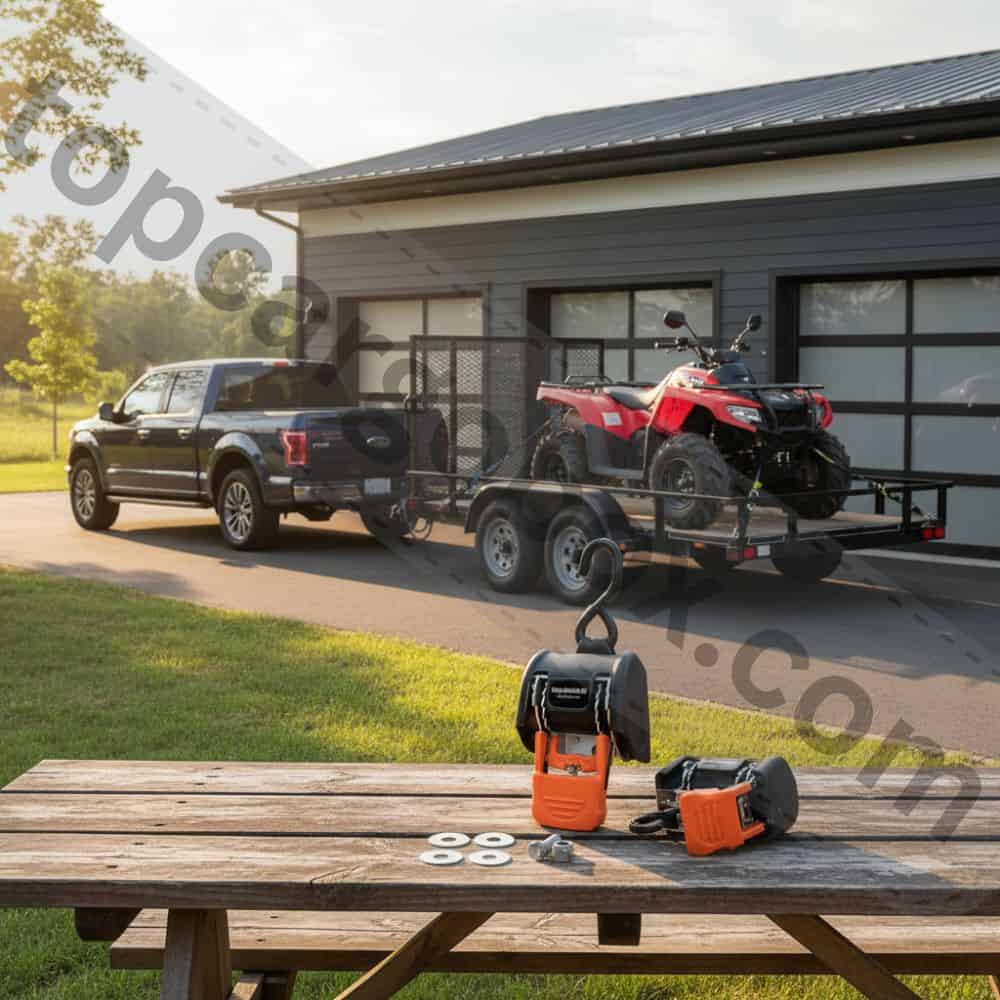
Remember the old school way of dealing with tie-downs? You’d wrestle with a tangled mess of webbing, fight with a rusty ratchet, and always, always have a bunch of excess strap flapping in the wind like a sad flag. It totally sucked. Well, technology has finally caught up, and retractable ratchet straps are here to make your life infinitely easier. Imagine a seatbelt for your cargo. With a simple push of a button, the webbing smoothly retracts into the housing, keeping everything neat, tidy, and, most importantly, off the ground where it can get dirty or damaged. No more grunt work trying to coil everything perfectly. This isn’t just a convenience feature; it’s a durability and safety feature. Loose straps can get caught in wheels or unravel while driving, creating a legit hazard. A retractable system eliminates that problem entirely. It’s one of those “why didn’t they think of this sooner?” innovations that you’ll wonder how you ever lived without.
A Closer Look at Top-Tier Features and Specs
Let’s break down what you should be looking for in a premium 3,500 lbs break strength retractable strap. We’ll use a popular model like the CargoBuckle G3 as our real-world example, because, come on, it’s a great one to talk about. You want to know exactly what you’re bolting onto your truck or trailer.

Feature | Specification & Benefit |
|---|---|
Break Strength | 3,500 lbs per strap – Provides an immense safety margin for extreme forces. |
Safe Working Load Limit (WLL) | 1,167 lbs per strap – Your go-to number for safe, daily use with heavy loads. |
Webbing Material & Width | 2-inch wide, industrial-grade polyester webbing – The wide profile distributes force beautifully and resists abrasion and UV rays. |
Hardware Material | Anti-corrosive alloy steel – This is crucial. It means your ratchet mechanism and hooks won’t turn into a rusty mess after one rainy season. |
Retractable Length | Adjusts up to 6 feet (72 inches) – Offers fantastic flexibility for securing a wide range of items from a compact motorcycle to a bulky side-by-side. |
Mounting System | Bolt-on design with included hardware – Creates a permanent, rock-solid mounting point that’s far more secure than a hook that can slip off. |
Dual Safety Lock | A two-stage locking mechanism inside the ratchet – This is the brains of the operation, ensuring the strap cannot accidentally release under tension or vibration. |
Getting the Most Out of Your Heavy-Duty Straps: Proper Use and Technique
Alright, so you’ve got this awesome piece of gear. How do you use it like a pro? It’s not just about cranking it down until your face turns red. First, always, always mount the ratchet body to a solid, structural part of your vehicle or trailer. The included bolts and washers are there for a reason—use them! A flimsy sheet metal tie-down point is a recipe for disaster. Next, route the strap. Avoid sharp edges at all costs. If you have to go over a corner, use a dedicated edge protector or even an old piece of garden hose. That polyester webbing is tough, but it’s not immune to being sliced open. Then, engage the ratchet. You’ll hear a satisfying click as the pawl engages. Now, start tensioning. The key is to take up the slack methodically. Pull the slack through, then ratchet it tight. You’re aiming for a strap that is taut and doesn’t have any significant sag, but you’re not trying to compress the suspension of your ATV into a pancake. Over-tightening can damage your cargo and put insane, unnecessary stress on the strap itself. Fair enough?
Common Mistakes You Absolutely Need to Avoid
Let’s be real, we’ve all cut corners before. But with heavy loads, a small mistake can have big consequences. So, here are a few “don’ts” that are a really big deal. Don’t ever use a twisted strap. A twisted strap has a significantly reduced break strength because the force isn’t distributed evenly across the full width of the webbing. It’s a major weak point. Don’t forget to check your tension after the first few miles. Everything settles, and you might need to give the ratchet a couple more clicks. Don’t use damaged equipment. If you see any cuts, fraying, or rust on the critical ratchet components, just forget it. It’s not worth the risk. That strap has done its job, retire it with honor. And please, don’t mix and match components from different strap sets. That ratchet is calibrated for that specific webbing’s thickness and strength. Using a random strap with your fancy ratchet is a long shot that you don’t want to take.
Real World Scenarios: Putting That 3,500 lbs Strength to Work
So, where does all this power and convenience actually come into play? Oh, let me count the ways. Imagine loading up your classic car onto a trailer. That’s a heavy, expensive, and frankly, precious load. Using two or four of these straps with a 3,500 lbs break strength gives you the ultimate peace of mind. You’re not just holding it in place; you’re creating a fortress on wheels. Or picture your weekend warrior setup: a side-by-side (SxS) in the back of your truck. These things can weigh well over 1,500 lbs. By using two straps in the front and two in the rear, each with a WLL of 1,167 lbs, you are totally covered, with strength to spare for those bumpy off-road trails to the campsite. Even for a heavy-duty riding lawn mower or a loaded-down motorcycle, the overbuilt nature of these straps means you’re operating well within their comfort zone. They’re just chilling, doing their job without breaking a sweat.
Maintenance and Care for Long-Lasting Reliability
These tools are built tough, but they’re not indestructible. A little bit of TLC will keep them protecting your cargo for years. After a muddy or salty trip, give the straps a quick wipe-down with a damp cloth. Let the webbing dry fully before you retract it back into the housing; storing it wet is a surefire way to promote mildew and weaken the fibers. Every so often, take a close look at the webbing for any signs of wear, and check the ratchet mechanism for smooth operation. A very light spray of a silicone-based lubricant on the moving parts of the ratchet can work wonders, but avoid heavy greases that will just attract dirt. It’s a simple routine that takes five minutes, but it ensures your gear is always ready when you are. I really appreciate it when a product is easy to maintain, and this one totally is.
The Final Word on Upgrading Your Tie-Down Game
At the end of the day, securing a heavy load isn’t just about following DOT regulations or avoiding a ticket—though that’s definitely a part of it. It’s about the safety of everyone on the road with you, and it’s about protecting the valuable investments you’ve worked hard for. Making the switch from basic, questionable straps to a dedicated, retractable system with a legit 3,500 lbs break strength is one of the smartest upgrades you can make. The reduction in stress is honestly priceless. No more frantic glances in the rearview mirror, no more pre-trip anxiety. You can just hook, ratchet, and go, with the quiet confidence that your cargo isn’t going anywhere. So, next time you’re gearing up for a haul, ask yourself: is my current setup really enough? Your future, more relaxed self will thank you for making the change.

Our team is creating outdoor-gear relevant articles with passion. If our articles can help you to find the correct solutions for your questions, we will be happy about that. In the content creation process, we usually collect accurate and useful information online or offline to compile our content in an organized way. Consequently, we can guarantee that you can discover some expected answers to your questions. We appreciate your time on our site.