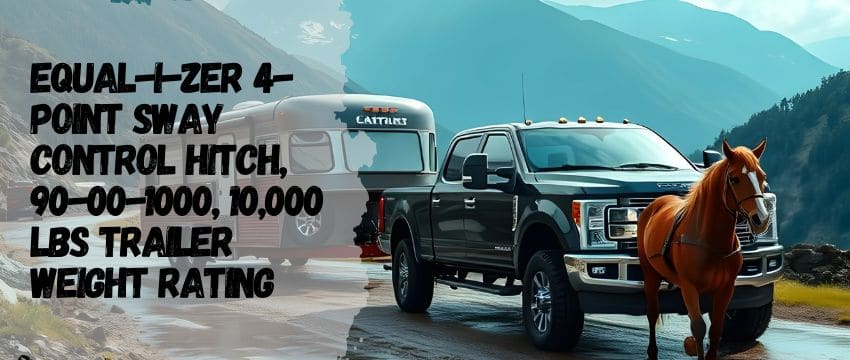
Towing a trailer can be a daunting task, especially when navigating windy roads, sudden maneuvers, or heavy traffic. Ensuring safety and stability on the road requires a hitch that not only distributes weight effectively but also combats trailer sway. The Equal-i-zer 4-Point Sway Control Hitch has emerged as a leading solution, combining advanced weight distribution with patented sway control technology. Designed for bumper-pull trailers, this hitch is engineered to provide peace of mind for RVers, boat owners, and cargo haulers alike. In this article, we’ll explore how this hitch works, its standout features, and why it’s become a trusted choice for towing enthusiasts.
Integrated 4-Point Sway Control: How It Works
The Equal-i-zer hitch’s standout feature is its Integrated Sway Control (ISC), a system that uses four friction points to resist trailer sway. Unlike add-on sway control devices that rely on separate components, the ISC is built into the hitch’s design. When the spring arms are tensioned, steel-on-steel friction is generated at two points on the hitch head and two points on the L-brackets attached to the trailer. This friction creates resistance against lateral movement, making it harder for the trailer to sway during wind gusts, uneven road conditions, or when passing large vehicles like semi-trucks.

This system eliminates the need for external sway bars or chains, simplifying setup and reducing clutter. The friction points are adjustable, allowing users to fine-tune the level of resistance based on their trailer’s weight and towing conditions. For example, if you’re hauling a tall RV through a windy mountain pass, tightening the sway brackets increases friction, enhancing stability. The result is a smoother, safer ride where the trailer stays aligned with the tow vehicle, reducing driver fatigue and the risk of jackknifing.
Weight Distribution: Balancing the Load
Weight distribution is critical for maintaining control of both the tow vehicle and trailer. Without proper distribution, excessive tongue weight can cause the tow vehicle’s rear axle to sag, lifting the front wheels and compromising steering and braking. The Equal-i-zer hitch addresses this by transferring tongue weight from the rear axle to the front axle of the tow vehicle and back to the trailer axles. This ensures all wheels maintain optimal contact with the road.
The hitch achieves this through its spring bars, which act as levers to redistribute weight. During setup, tension is applied to the bars, effectively “lifting” the trailer’s tongue and shifting weight forward. This process restores the tow vehicle’s natural balance, keeping the front wheels grounded for better handling. The system is adjustable via spacer washers and L-bracket positioning, allowing customization for different loads. For instance, a heavily loaded toy hauler might require more spacer washers to achieve proper weight transfer, while a lightweight utility trailer might need fewer.
Compatibility and Versatility
One of the Equal-i-zer hitch’s strengths is its compatibility with a wide range of vehicles and trailers. It’s designed for bumper-pull trailers, including RVs, horse trailers, boat trailers, and cargo trailers, with a maximum gross towing weight of 10,000 lbs. The hitch accommodates trailers with surge brakes, making it ideal for boat owners who rely on this braking system. Its 2-5/16” hitch ball (sold separately) suits most standard couplers, and the shank offers 7” of rise and 3” of drop to align with varying trailer heights.

The hitch is compatible with trucks, SUVs, and other vehicles equipped with a 2” receiver. However, users must ensure their vehicle’s towing capacity aligns with the hitch’s ratings. For example, a half-ton pickup with a 9,000-lb towing capacity can safely use the Equal-i-zer hitch for trailers under that limit. The sway control brackets are positioned 27”–32” from the coupler, a range that minimizes stress on the trailer frame while maximizing sway resistance. This adaptability makes the hitch suitable for everything from compact travel trailers to large horse haulers.
Installation: A Step-by-Step Process
Installing the Equal-i-zer hitch requires careful attention to detail but is manageable for most DIYers. The process begins by mounting the hitch ball to the head, ensuring it matches the trailer coupler’s size and is torqued to 430 ft-lbs. Next, the shank is secured into the vehicle’s receiver tube, followed by attaching the hitch head with spacer washers to pre-load the angle. Proper alignment of the hitch ball height with the trailer coupler is crucial; incorrect height can affect weight distribution and sway control.
The sway brackets are then installed 25”–32” from the coupler, avoiding obstructions like brake lines. Link plates are bolted to the trailer frame, and L-brackets are adjusted to align with the spring arms. Weight distribution setup involves measuring the tow vehicle’s front axle height before and after coupling the trailer, then tensioning the spring arms to restore balance. While the process involves multiple steps, the manual provides clear instructions, and many users complete the installation in 2–3 hours. Professional installation is recommended for those unfamiliar with towing systems.
Customer Feedback and Industry Recognition
The Equal-i-zer hitch has earned a loyal following, with over 99% of customers recommending it to others. Users frequently praise its sway control effectiveness, noting how it handles crosswinds and highway speeds without requiring constant steering corrections. Many RV owners highlight the reduced “white-knuckle” driving experience, especially when towing tall trailers prone to sway. The hitch’s durability also receives accolades, with customers reporting years of trouble-free use even in harsh weather conditions.

Industry awards further validate its performance. It has won Trailer Life Magazine’s Reader’s Choice Gold Award three times, a testament to its popularity among enthusiasts. Customers also appreciate the responsive customer support and availability of replacement parts. Common critiques focus on the initial learning curve for adjustments, though most agree that once dialed in, the hitch performs flawlessly.
Maintenance and Warranty
To maintain peak performance, the Equal-i-zer hitch requires regular upkeep. The friction surfaces on the hitch head and sockets must be lubricated before each trip to minimize noise and wear. Bolts and pins should be checked for tightness, and the angle set bolt may need periodic tightening during the break-in period. The powder-coated finish resists rust, but storing the hitch indoors prolongs its lifespan.
Progress Manufacturing backs the hitch with a Limited Lifetime Warranty, covering defects in materials and workmanship for the original owner. The warranty excludes damage from improper installation or overloading, emphasizing the importance of adhering to weight limits. Customers can register their hitch online and access troubleshooting resources via EqualizerHitch.com.
Specifications at a Glance
Feature | Detail |
|---|---|
Brand | Equal-i-zer |
Item Weight | 1632 Ounces |
Vehicle Service Type | Trucks, SUVs, RVs, Trailers |
Material | Alloy Steel |
Finish Type | Powder Coated |
Max Gross Towing Weight | 10,000 lbs |
Max Tongue Weight | 1,000 lbs |
Hitch Ball Size | 2-5/16” (Not Included) |
Shank Length | 12” |
Sway Bracket Positioning | 27”–32” from coupler center |
Spring Bar Dimensions | 36” long x 1-3/8” wide |
Receiver Compatibility | 2” hitch receiver |
Warranty | Limited Lifetime (Original Owner) |
Conclusion
The Equal-i-zer 4-Point Sway Control Hitch is a game-changer for anyone serious about towing safety. Its integrated sway control and weight distribution systems work in tandem to stabilize trailers, improve vehicle handling, and reduce driver stress. While the installation and adjustment process demands patience, the payoff is a smoother, safer towing experience backed by robust construction and positive customer feedback. Whether you’re hauling an RV across the country or a boat to the lake, this hitch delivers the reliability and performance needed for peace of mind on the road.
Answers to Common Questions
1. Is its sway control effective for windy conditions?
Yes, the Equal-i-zer hitch excels in windy conditions. Its four-point friction system creates resistance against lateral forces, preventing the trailer from swaying side-to-side. Users report noticeable stability when driving through gusty areas or passing large trucks. The adjustable tension allows customization for varying wind intensities. Many customers highlight how the hitch reduces the need for constant steering corrections, even in strong crosswinds.

2. Is it compatible with my vehicle?
The hitch is compatible with most vehicles equipped with a 2” receiver, including trucks, SUVs, and RVs. It supports a maximum trailer weight of 10,000 lbs and tongue weight of 1,000 lbs, so verify your vehicle’s towing capacity matches these limits. Specialty shanks are available for unique setups, such as lifted trucks or low-profile trailers. Always consult your vehicle’s manual and the hitch’s guidelines before installation.
3. Does it improve steering and braking?
Absolutely. By redistributing tongue weight to the tow vehicle’s front axle, the hitch improves steering responsiveness and traction. Balanced weight also prevents rear axle sag, ensuring brakes function efficiently. Users often note shorter stopping distances and reduced fishtailing during sudden stops. Proper setup is key—incorrect adjustments can diminish these benefits.
4. Does it work with surge brakes?
Yes, the Equal-i-zer hitch is fully compatible with trailers equipped with surge brakes. Its design doesn’t interfere with the surge brake mechanism, making it ideal for boat trailers. The sway control operates independently of braking systems, so there’s no risk of conflicting forces. This compatibility is a major advantage for marine enthusiasts.
5. Is it difficult to install?
Installation is moderate in difficulty but manageable with basic tools. The process involves precise measurements, bolt torquing, and weight distribution adjustments. First-time users may spend 2–3 hours following the manual’s step-by-step instructions. Professional installation is advisable for those unfamiliar with towing systems. Many customers find the effort worthwhile for the performance gains.
6. What do customers say?
Customers overwhelmingly praise the hitch’s sway control and durability. Many describe it as a “life-saver” for long trips, citing reduced trailer sway and improved confidence. Some note a learning curve for adjustments but appreciate online resources and customer support. A few mention initial noise, which lubricating the friction surfaces resolves. Overall, it’s highly recommended for its reliability and safety features.

Our team is creating outdoor-gear relevant articles with passion. If our articles can help you to find the correct solutions for your questions, we will be happy about that. In the content creation process, we usually collect accurate and useful information online or offline to compile our content in an organized way. Consequently, we can guarantee that you can discover some expected answers to your questions. We appreciate your time on our site.