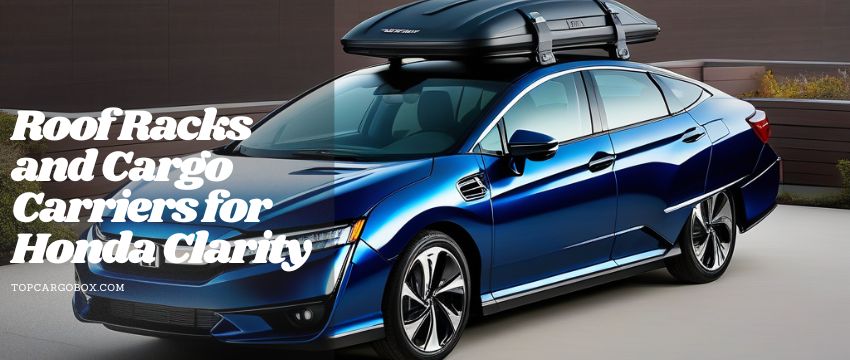
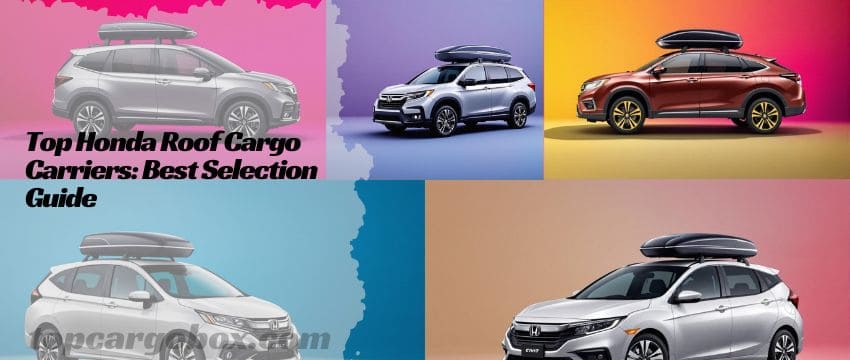
Hey Honda crew! What’s up? Feeling that familiar squeeze when packing for a big trip, a camping weekend, or just hauling bulky gear? Your Civic’s trunk is awesome for groceries, but throw in strollers, ski gear, or luggage for the family, and suddenly it’s like playing Tetris on expert mode. You love your Honda – reliable, efficient, fun to drive – but sometimes you just need more room without upgrading the whole vehicle. That’s where a killer roof cargo carrier swoops in to save the day! Forget stuffing things to the roof inside or dragging a clunky trailer. We’re diving deep into the absolute best roof cargo solutions specifically tailored for your Honda, whether you roll in a spacious Pilot, a versatile CR-V, a sleek Accord, or even a compact Fit. Let’s unlock that extra space you’ve been craving!
Honda Model-Specific Roof Cargo Carrier Guides
- Best Cargo Boxes for Honda Pilot
The Honda Pilot is a beast for family trips, but even its spacious cabin needs backup. This guide breaks down four top-rated roof boxes that maximize storage without killing fuel economy. From sleek low-profile designs to heavy-duty haulers, you’ll find the perfect match for road trips, camping, or ski weekends. - Top Roof Cargo Carriers for Honda Passport
Adventure-ready but need more gear space? This list covers five rugged cargo carriers that fit the Passport’s roof rails like a glove. Whether you’re loading bikes, camping gear, or extra luggage, these picks balance durability, aerodynamics, and easy installation. - Best Roof Boxes for Honda Insight
Love your Insight’s efficiency but need extra room? These four cargo boxes are tailored for hybrids, keeping drag low so your MPG stays high. Perfect for weekend getaways or hauling bulky items without sacrificing the car’s sleek profile. - Top Cargo Carriers for Honda HR-V
The HR-V is versatile, but sometimes you just need more cargo space. This roundup features four roof boxes that enhance storage without overwhelming the compact SUV’s design. Great for urban drivers who occasionally escape to the outdoors. - Best Roof Boxes for Honda Fit
Small car, big storage potential. These three cargo carriers turn your Fit into a mini hauler, ideal for road trips, moving gear, or freeing up cabin space. Compact yet surprisingly spacious, they’re a game-changer for Fit owners. - Top Cargo Boxes for Honda Civic
Who says sedans can’t haul? This mega-list covers eleven roof carriers that fit the Civic perfectly, from hard-shell boxes for weather protection to soft bags for occasional use. No more leaving luggage behind—just extra space when you need it. - Best Roof Carriers for Honda Accord
The Accord’s trunk is roomy, but sometimes you need more. These seven cargo solutions—including aerodynamic boxes and low-profile baskets—keep your sedan functional for trips, sports gear, or bulk shopping. - Honda Odyssey Roof Cargo Box Guide
Even minivans hit their storage limit. This guide helps Odyssey owners pick the best roof box for family vacations, keeping luggage secure and dry while preserving interior comfort. No more cramming suitcases between car seats! - Top Roof Cargo Carriers for Honda CR-V
The CR-V is already a storage champ, but adventure calls for more. These three premium carriers add serious hauling power, whether you’re loading camping gear, skis, or extra luggage for a cross-country drive.
Roof Cargo Carrier For Honda Cars
- Yakima SkyBox Cargo Box Review
The Yakima SkyBox delivers rugged protection with its dent-resistant shell and dual-sided opening for easy access. Its 16–21 cu. ft. capacity swallows ski gear, luggage, or camping supplies effortlessly. Perfect for SUVs and minivans, it features integrated locks and a streamlined shape to minimize wind noise. You’ll appreciate the tool-free installation and fade-resistant finish. Ideal for year-round adventurers prioritizing durability. - Menabo Diamond Cargo Box Guide
Sleek and European-designed, the Menabo Diamond merges style with 18–22 cu. ft. of storage. Its low-profile build won’t scrape garages while the double-wall construction shields gear from extreme weather. The dual-opening hatches and integrated lighting slots are genius touches. Expect whisper-quiet travel and easy mounting on most crossbars. A premium pick for drivers craving aesthetics and function. - JEGS Rooftop Cargo Carrier Breakdown
JEGS serves up serious value with this no-frills, 15 cu. ft. carrier built for hauling tools or bulky items. The ABS plastic shell withstands impacts, while stainless-steel hardware prevents rust. It’s compatible with round, square, or aero bars and installs in minutes. Though basic, it’s a workhorse for budget-focused truck/SUV owners. Just don’t expect fancy features. - SportRack Vista Cargo Box Review
SportRack’s Vista series balances affordability with 16 cu. ft. of reliable, weatherproof storage. The tapered design cuts wind drag, and the dual-side opening simplifies loading. It includes SKS locks and fits most factory crossbars without adapters. While lighter than premium brands, it handles family trips smoothly. Perfect for occasional users needing extra space without the price tag. - Thule Pulse Cargo Box Deep Dive
Thule’s entry-level Pulse offers 11–16 cu. ft. capacity in a compact, user-friendly package. Its textured lid prevents scratches, and the central dual-lock system ensures security. The streamlined shape preserves fuel efficiency, and it weighs just 38 lbs for easy handling. Great for sedans or small SUVs tackling weekend getaways. A smart gateway into Thule’s ecosystem. - GoPlus Roof Box Analysis
GoPlus delivers surprising quality at a bargain price, packing 14 cu. ft. into an aerodynamic shell. Features include dual-opening lids, reinforced latches, and UV-resistant materials. Setup takes 20 minutes with standard tools, and it pairs well with most crossbars. While not ultra-premium, it’s a legit solution for infrequent trips or tight budgets. - Trunx Cargo Carrier Review
Trunx stands out with military-grade ABS plastic and 18 cu. ft. of cavernous storage. The low-profile build reduces drag, while internal tie-downs secure shifting loads. It includes integrated locks and fits raised rails without adapters. Surprisingly quiet for its size, it’s built for heavy-duty use. A dark horse contender against pricier brands. - INNO Rooftop Cargo Boxes Guide
INNO boxes blend Japanese engineering with sleek aesthetics, offering 12–18 cu. ft. capacities. Their Wedge and Shadow models feature tool-free mounts and dual-side access. The reinforced bases handle 165 lbs, and anti-vibration pads eliminate rattles. Ideal for urban drivers wanting subtle style and reliability. - Rhino Rack MasterFit Review
Rhino Rack’s MasterFit series uses vehicle-specific mounts for a flawless integration. With 14–19 cu. ft. options, it offers near-flush installation on popular SUVs. The auto-latching system and dual-layer walls ensure all-weather protection. A top pick for seamless OEM-like looks and hassle-free security. - Thule Motion XT vs. Force Showdown
This face-off compares Thule’s two titans: the Motion XT’s glossy, aerodynamic design vs. the Force’s matte, angular practicality. The XT wins on noise reduction and modern features, while the Force offers 10% more interior space at a lower cost. We break down weight, security, and real-world performance to help you choose. - Tuffiom Roof Box Review
Tuffiom’s rugged carrier boasts 18 cu. ft. capacity and aluminum-reinforced walls for extreme durability. The double-sealed hatch and dual-side access handle torrential rain, while internal straps stabilize cargo. Setup takes 15 minutes, and it includes lifetime warranty support. Built for off-grid adventurers who abuse gear. - Yakima CBX Cargo Box Guide
Yakima’s CBX series merges 16–18 cu. ft. storage with a wide-mouth hatch for loading bulky items. The SlamLock mechanism ensures one-handed operation, and the textured floor prevents slipping. It’s optimized for low wind noise and fits most aftermarket racks. Perfect for road-trippers needing quick, frequent access.
Thule-Specific Comparisons
- Thule Force 3 Ultimate Guide
Everything about Thule’s value champion: 16–22 cu. ft. capacities, scratch-resistant matte finish, and tool-free mounting. We cover waterproofing tests, weight limits, and real-world fuel impact. Includes tips for pairing with Honda/Toyota crossbars. - Thule Motion 3 Roof Box Review
Thule’s premium Motion 3 shines with a glossy shell, enhanced aerodynamics, and SmartSlide mounting. The 17 cu. ft. (L) model suits mid-size SUVs, while the 22 cu. ft. (XL) handles minivans. Features include integrated locks and self-aligning latches. - Thule Motion 3 vs Competitors
Motion 3 battles Yakima SkyBox and INNO Wedge. We compare noise levels (5dB quieter than rivals), security features, and price-to-value. Spoiler: Thule wins on sleekness, Yakima on raw space. - Thule Pulse 614 Comparison
How Thule’s compact Pulse 614 (11 cu. ft.) stacks up against SportRack Vista and GoPlus. Ideal for hatchbacks, it’s lighter (32 lbs) and more aerodynamic but pricier. Great for couples’ weekend trips. - SportRack Vista XL vs Thule Force
Budget vs. mid-range clash: Vista XL offers 18 cu. ft. for $400 less, but Thule counters with better materials and a 5-year warranty. We reveal which survives hail storms and potholes.
Budget Brand Battles
- JEGS vs GoPlus Cargo Carrier
Two sub-$300 boxes duke it out. JEGS wins on hardware durability, GoPlus on sleek latches and UV resistance. Both lack advanced aero but deliver solid basics for occasional use. - Yakima CBX XXL vs Competitors
The XXL’s 22 cu. ft. monster capacity faces Thule Motion XT XL and Rhino Rack. Yakima leads in heavy-weather sealing, while Thule is quieter at 75+ mph. Best for large families. - Thule Motion 3 L vs Motion XT L
Thule’s internal rivalry: The newer Motion 3 has smarter latches and glossier finish, but the XT is 5 lbs lighter and $50 cheaper. Performance differences are minimal—choose based on looks.
Key Features Table
Product Line | Best For | Capacity Range | Standout Feature |
|---|---|---|---|
Yakima SkyBox/CBX | All-weather protection | 16–22 cu. ft. | SlamLock latches |
Thule Motion Series | Aerodynamics & style | 11–22 cu. ft. | SmartSlide installation |
SportRack Vista | Budget-conscious buyers | 14–18 cu. ft. | Wallet-friendly pricing |
JEGS/GoPlus | Occasional haulers | 14–15 cu. ft. | Ultra-low cost |
Rhino Rack MasterFit | OEM-like integration | 14–19 cu. ft. | Vehicle-specific mounts |
Why Your Honda Absolutely Needs a Roof Carrier (Seriously!)
Okay, let’s get real. Hondas are genius at interior packaging. Engineers work magic to give you maximum cabin space. But physics is physics, right? There’s only so much square footage inside. Maybe you’ve tried the old-school roof strap-down method for that kayak or Christmas tree, praying it doesn’t become a highway hazard. Not exactly chill, and definitely not secure for valuable gear. A dedicated roof carrier changes everything. It’s about safety first – keeping your stuff locked down and protected from the elements. It’s about convenience – loading becomes a breeze compared to wrestling things into the trunk. It’s about maximizing what you already own. Think about that epic cross-country road trip in your Odyssey where everyone actually has legroom inside the van because the bulky suitcases and coolers are riding securely up top. Or imagine hitting the slopes with your Passport, easily fitting four sets of skis and boots without cramming wet gear next to the kids. How awesome would that be? It transforms your Honda from a daily commuter into a legit adventure-mobile.
Navigating the Roof Cargo Jungle: Types Explained Simply
Alright, so you’re convinced you need one. Awesome! But step into any store or browse online, and the choices can feel overwhelming. Don’t sweat it; we’ll break down the main players in the roof carrier game:
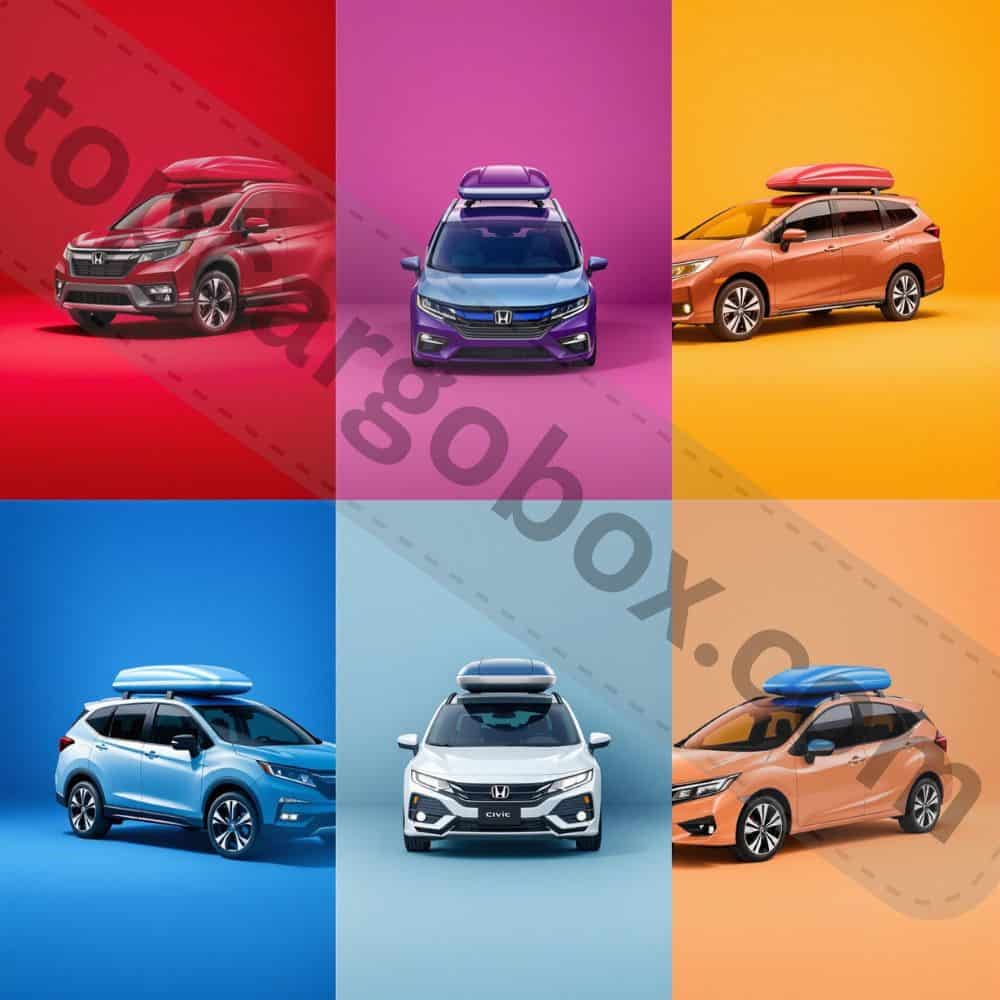
- The Classic Hard-Shell Box (Your Weatherproof Fort Knox): Picture a sleek, aerodynamic pod locking onto your roof rails. These are the heavy hitters for serious protection. They’re rigid, super secure, and laugh in the face of rain, snow, sleet, or highway grime. Your luggage, camping gear, or precious cargo stays bone-dry and dust-free. The downside? They live up on your roof full-time or need storage space when not in use, and they can be a bit of an investment upfront. Totally worth it for frequent travelers or anyone needing max weather protection. Think family ski trips in your Pilot or long-haul moves with your Accord where keeping things clean and dry is non-negotiable.
- The Flexible Soft-Shell Bag (Your Affordable, Compact Sidekick): These are like giant, super tough duffel bags designed for your roof. They’re usually made from super durable, waterproof materials (like PVC-coated polyester) and strap directly to your roof rails or crossbars. The big wins? Cost – they’re often much easier on the wallet than hard boxes. Storage – when empty, you can literally fold them down into a bag smaller than a sleeping bag and stash it in your garage or trunk. Perfect for occasional use or tight budgets. The catch? While waterproof, they aren’t lockable like a hard box, and loading requires a bit more care since the sides aren’t rigid. Ideal for that weekend camping trip in your CR-V where you need to haul tents and sleeping bags but want something easy to stash afterwards.
- The Rugged Roof Basket (Your Open-Air Hauler): Want maximum versatility and that cool, adventurous look? Roof baskets are essentially metal cages that mount to your crossbars. They’re fantastic for bulky, awkward, or dirty items you wouldn’t want inside your car anyway – think firewood, muddy mountain bikes (with fork mounts!), oversized coolers, or even spare tires for off-road adventures. You strap everything down using nets or bungees. They offer tons of space and are super durable. But, they offer zero protection from weather or theft, and the open design creates more wind noise and hurts fuel economy more than enclosed options. Think strapping kayaks or a pile of camping gear for a music festival trip in your HR-V.
- The Hybrid Platform (Your Heavy-Duty Foundation): Sometimes called cargo trays or decks, these are flat platforms that sit on your crossbars. They provide a solid base to strap down anything, often used in conjunction with other carriers (like strapping a soft bag onto the platform for extra security and airflow) or for hauling particularly heavy or large items. They’re incredibly strong and versatile. Like baskets, they don’t offer weather protection, but they often have a lower profile. Great if you need a super sturdy base for irregular loads on your Civic or Fit.
Table: Honda Roof Cargo Carrier Types At A Glance
Carrier Type | Key Features | Best For | Weather Protection | Security Level | Stowability |
|---|---|---|---|---|---|
Hard-Shell Box | Rigid structure, aerodynamic shape, locks securely, excellent protection | Frequent travel, valuable gear, all-weather needs, families | Excellent | High (Lockable) | Bulky (Requires Storage Space) |
Soft-Shell Bag | Flexible, waterproof fabric, straps down, affordable | Occasional use, budget-conscious, gear needing weather resistance | Very Good | Low-Medium (Often relies on straps) | Excellent (Folds Small) |
Roof Basket | Open metal cage, maximum versatility for bulky/awkward items, durable | Dirty gear (firewood, bikes), oversized items, off-road aesthetic | None | Low (Relies on straps/nets) | Good (Takes Space) |
Platform (Tray/Deck) | Flat, sturdy base, provides foundation for strapping various loads, heavy-duty | Heavy items, irregular shapes, use with soft bags, ultimate versatility | None | Low (Relies on straps) | Moderate |
The Golden Rule: Honda Compatibility is EVERYTHING
This is HUGE, folks. You absolutely cannot just grab any carrier off the shelf and expect it to magically fit your specific Honda. Getting this wrong means wasted money, potential damage to your car, or worse – a carrier flying off on the highway. No way! Compatibility hinges on two main things:
- Your Honda’s Roof Setup: Does your car have factory-installed side rails running front-to-back? Or just little fixed points on the roof? Or maybe nothing at all? Check your owner’s manual or just look! If you only have fixed points, you definitely need crossbars first. Even if you have side rails, most carriers need specific crossbars mounted across those rails. For Hondas with bare roofs (like some older Fits or Civics), you’ll need a complete roof rack system (feet, crossbars) installed before even thinking about a carrier. Seriously, don’t skip this step.
- The Carrier’s Fit Kit: Every decent hard box or basket comes with specific mounting hardware designed to clamp onto certain crossbar shapes (round, square, aero/oval, raised rail, factory bars). The manufacturer provides a fit guide – use it religiously! Just because it looks like it might fit doesn’t mean it’s safe or secure. For soft bags, ensure the straps are long and strong enough to work with your specific crossbar setup and roof shape. Trying to force an incompatible carrier is asking for trouble. Trust me, you don’t want that stress.
Getting It On There: Installation Demystified (It’s Easier Than You Think!)
Feeling a bit intimidated by the installation process? Totally normal! But honestly, for most carriers, it’s way less complicated than assembling that flat-pack furniture that still haunts your dreams. 95% of decent carriers come with clear instructions and all the hardware you need. Here’s the lowdown:
- Gather Your Gear: Usually just the carrier parts, the mounting kit, the instructions (read them first!), maybe a screwdriver or Allen wrench, and a tape measure to center it properly. A helper makes lifting the box onto the roof much easier and safer, especially for larger models on taller SUVs like the Pilot or Passport. Trying to wrestle a 20+ lb box solo onto your roof? Not a great plan.
- Prep Your Honda: Park on level ground. Clean off your roof and crossbars – dirt and grit can interfere with the clamps. Measure the distance between your crossbars; the carrier needs to fit securely within this span. Position the carrier carefully before tightening anything down. Center it side-to-side and ideally place it closer to the front crossbar than the rear for better aerodynamics (check your manual).
- Follow the Steps: It usually involves attaching mounting feet or clamps to the carrier base, positioning it over the crossbars, and then tightening the clamps extremely securely according to the torque specs in the manual. This part is crucial! Under-tightening is dangerous. Over-tightening can damage your crossbars. Use a torque wrench if specified. Double-check every clamp point once it’s all tight. Give the carrier a firm shake – it shouldn’t budge at all. Feeling unsure? Many auto shops or rack specialists offer professional installation for a reasonable fee. No shame in that game!
- Soft Bags & Baskets: These are often simpler. Baskets bolt directly to the crossbars. Soft bags involve threading strong straps under the crossbars and through the bag’s attachment points, then cinching them down super tight and securing any excess strap. Always, always, always do a test drive on local roads before hitting the highway. Listen for new noises and pull over to double-check everything is still tight after the first few miles.
Top Contenders: Roof Carrier Stars for Your Honda
Alright, let’s talk specific recommendations! These brands consistently deliver quality and have models proven to fit various Hondas well. Remember to always verify the specific model and size against your Honda’s year and roof setup using the manufacturer’s fit guide!
- Thule Motion Series (Hard Box – The Premium All-Rounder): Dude, these boxes are legit. Known for their sleek aero design (saves you gas money!), super easy SideOpening or Motion XT hatch, excellent build quality, and great security features. They come in sizes from compact (perfect for a Civic or Insight) up to massive (ideal for a Pilot or Odyssey packed to the gills). The matte finishes look sharp. You pay a bit more, but for frequent use and top performance, they’re hard to beat. Check out Honda Civic cargo boxes to see specific Motion models that fit. The peace of mind on a long trip? Totally worth it.
- Yakima SkyBox Series (Hard Box – Rugged & Spacious): Bro, if you need serious cubic feet and a super tough shell, SkyBox is a beast. They tend to be a bit boxier than Thule, meaning slightly more interior space but maybe a tiny bit more wind noise. The locking mechanisms are robust, and they’re built to handle harsh weather. Great for families needing maximum volume in their CR-V or Pilot, or for hauling bulky sports gear. See Honda CR-V rooftop carriers for compatible SkyBox options. That extra space when you really need it? Awesome.
- RoofPax (Hard Box – Value Leader): What’s up, budget-conscious adventurers? RoofPax offers surprisingly good hard-shell boxes at a significantly lower price point than Thule or Yakima. Don’t expect quite the same level of aerodynamic finesse or premium materials, but for occasional use or if cost is a major factor, they deliver solid protection and decent features. They often fit popular Honda models like the Accord or HR-V well. Explore Honda Accord cargo carriers to find RoofPax models. Getting a hard box without breaking the bank? Fair enough!
- Yakima SkyRise (Soft Bag – Premium Protection): Need a soft bag but want top-tier weather resistance? The SkyRise is like a fortress. It uses thick, durable fabric and has a rigid base for easier loading. It’s definitely pricier than basic soft bags, but you’re paying for serious durability and peace of mind in downpours. Folds down reasonably small. Great for the HR-V or Fit owner who needs reliable extra space for trips but doesn’t want a permanent box. Honda HR-V cargo boxes include soft bag options like this.
- SportRack Vista (Soft Bag – Solid Budget Choice): How’s it going for those wanting a simple, affordable solution? SportRack offers solid soft cargo bags that get the job done without fancy extras. They provide good waterproofing and durability for the price. Perfect for that once-or-twice-a-year camping trip or hauling extra luggage on your Insight. Just manage expectations – they won’t have the premium feel of a Yakima. Look at Honda Insight cargo boxes for SportRack fits. Cheap, cheerful, and functional? Sounds good.
- Yakima OffGrid (Basket – Adventure Ready): Ready to load up the dirty stuff? The OffGrid basket is tough, stylish, and integrates well with other Yakima gear (like bike racks or cargo dividers). The Megawarrior is even burlier for serious overlanding in your Passport. Provides that iconic adventure look and endless strapping options. Remember, weather exposure is the trade-off. Honda Passport cargo boxes guides often include basket options like these. Strapping down a canoe or a pile of firewood? Let’s go!
- Thule Canyon XT (Basket – Sleek & Strong): Prefer a slightly more streamlined basket look? The Canyon XT offers great strength with a lower profile than some competitors. The XT version has extended sides for more capacity. It’s well-made and integrates with Thule’s accessory ecosystem. A great choice for the CR-V or Pilot owner who wants versatility without a huge basket profile. Honda Pilot cargo boxes recommendations often feature the Canyon.
Choosing YOUR Perfect Match: It’s Personal!
So, how do you pick your winner? It’s not just about the biggest or shiniest. Ask yourself:

- What are you hauling MOST often? Luggage needs a hard box or soft bag. Bikes, kayaks, or firewood scream basket or platform. Dirty sports gear? Maybe a basket. Prized possessions? Hard box.
- How often will you use it? If it’s living on your roof 6 months a year, invest in a quality hard box. Once a year? A soft bag might suffice. Need it only for specific bulky items? A basket could be perfect.
- What’s your budget? Be realistic. Hard boxes are an investment. Soft bags and baskets offer more budget-friendly entry points. Factor in the cost of crossbars if you don’t have them!
- Where will you store it OFF the car? Hard boxes need garage space or a storage hoist. Soft bags fold away easily. Baskets are bulky but can often be wall-mounted.
- How important is fuel economy? Hard boxes are generally the most aerodynamic (especially sleek ones like Thule Motion). Soft bags are next. Baskets and platforms create the most drag. Every little bit counts on those long Honda road trips!
- Do you need security? If leaving gear unattended is common, a lockable hard box is the only real secure option. Soft bags and baskets rely on straps, which can be cut.
Living With Your Roof Carrier: Tips & Tricks
You’ve got it installed, packed, and you’re ready to roll! Sweet! Here’s how to make life with your roof carrier smooth sailing:
- Mind the Height!: Seriously, this is rule #1. You just added 10 to 20+ inches to your Honda’s height. Drive-thrus, low parking garages, and even some car washes are now potential hazards. Know your new total height! Measure from the ground to the tallest point of the loaded carrier. Write it on a sticky note on your dash if you have to. That moment you hear a horrible scraping sound? Bummer, and totally avoidable.
- Loading Smarts: Distribute weight evenly side-to-side and front-to-back. Put heavier items at the bottom and towards the front (over the front crossbar). Don’t exceed the weight limits! Your Honda’s roof rack system and the carrier itself have maximum weight capacities (often around 150-165 lbs total for the rack/carrier combined). Check both manuals! Exceeding this is dangerous and can damage your car. Pack tightly so things don’t shift around. Use cargo nets or straps inside the box/bag for extra security. How many times do you want stuff banging around up there?
- MPG Reality Check: Yep, adding a carrier, especially a loaded one, will hurt your Honda’s famous fuel efficiency. Aerodynamic boxes have the least impact (maybe 2-5% hit on the highway), baskets have the most (can be 10%+). Drive smoothly – aggressive acceleration and high speeds amplify the drag. Take it easy and enjoy the journey.
- Wind Noise: Some carriers are quieter than others, but expect some added whooshing or whistling, especially with baskets or soft bags not packed full. If it’s excessive, double-check it’s installed correctly and tightly. Sometimes adjusting the position slightly forward or backward can help. Music usually covers it!
- Security on the Go: Never leave valuables unattended in a soft bag or basket. Even with a hard box, park in well-lit areas when possible. It’s a deterrent, but nothing is 100% theft-proof. Use common sense.
- Cleaning & Care: Give your carrier a rinse after trips, especially if exposed to road salt or dirt. For hard boxes, use mild soap and water; avoid harsh chemicals. Check mounting points periodically for tightness. Store soft bags clean and dry. A little care makes them last way longer. Totally worth the few minutes.
Finding Your Honda’s Perfect Fit: Model-Specific Guidance
While the core principles apply to all Hondas, some models have quirks or particularly popular carrier choices. We’ve got dedicated guides to dive deep:
- Honda CR-V: One of the most popular SUVs out there, and a prime candidate for roof carriers! Check out the dedicated Honda CR-V rooftop cargo carriers guide for the best fits and tips specific to its roof rails and popular crossbar setups. Seriously, if you drive a CR-V, this is your go-to resource.
- Honda Civic & Accord: Don’t underestimate the cargo potential of your sedan! Finding carriers that fit the sleek profile and specific roof setups (often bare roof or fixed points needing crossbars) is key. Explore options in the Honda Civic cargo boxes and Honda Accord cargo carriers guides.
- Honda Fit: Maximizing space in this compact champ often means looking up! See what fits its unique roof in the Honda Fit cargo carriers guide. You’d be surprised what you can haul!
- Honda HR-V & Insight: These efficient crossovers and hybrids benefit hugely from roof carriers for adventures. Find compatible solutions in the Honda HR-V cargo boxes and Honda Insight cargo boxes resources.
- Honda Pilot & Passport: Built for families and adventure, these need carriers that match their capacity. Discover top picks in the Honda Pilot cargo boxes and Honda Passport cargo boxes guides.
- Honda Odyssey: The ultimate family hauler gets even more versatile with roof storage. Get the full scoop in the Honda Odyssey cargo roof box guide.
Wrapping It Up: Your Honda, Supercharged!
Alright, let’s get real about this carrier choice. Picking the right rooftop gear for your Honda isn’t like solving a Rubik’s cube blindfolded, but you do gotta put some thought into it. What are you actually hauling most weekends? How does that specific box or basket actually fit your car’s roof rails or crossbars? And honestly, how often are you gonna use the thing? Skipping these questions is how you end up with a pricey carrier collecting dust in the garage, or worse – one that just doesn’t work right. Don’t be that person! Ever felt that pang leaving gear behind because your trunk’s bursting? Yeah, that sucks. A good carrier solves that.
So picture this: You slap a weatherproof Thule Motion fortress onto your CR-V for ski season. Or maybe you grab a budget-friendly RoofPax box for your Accord’s occasional road trip. Feeling adventurous? A rugged Yakima basket lets your Passport haul muddy bikes and firewood like a champ. Got a compact Fit? A soft bag folds up tiny when you don’t need it. Totally different vibes, right? But here’s the magic: Every single one busts you out of trunk jail. Forget cramming bags like a stressed-out Tetris master. Stop agonizing over what stays home. And seriously, who wants their passengers squished next to a giant cooler? You deserve that cabin space back! Suddenly, it’s just you, your trusty Honda, all your gear, and miles of open road ahead. How awesome does that sound?
Ready to make it happen? Awesome. Find the carrier that clicks with your Honda life – whether that’s checking out Honda CR-V rooftop cargo carriers for your SUV or exploring Honda Civic cargo boxes for your sedan. Get it mounted properly (no wobbly grunt work!). Pack it smart, keeping an eye on that 150-165 lb weight limit. Then? Hit the gas with zero worries. Your next trip just got way more spacious and way less stressful. Go get it!

Our team is creating outdoor-gear relevant articles with passion. If our articles can help you to find the correct solutions for your questions, we will be happy about that. In the content creation process, we usually collect accurate and useful information online or offline to compile our content in an organized way. Consequently, we can guarantee that you can discover some expected answers to your questions. We appreciate your time on our site.