How’s it going? So, you’re planning a big adventure, maybe a cross-country move, or just a long-awaited family vacation. You’ve looked at your car, looked at the pile of gear, and thought, “No way is all this fitting in the trunk.” Your mind probably jumps straight to a roof box. I get it, they look awesome, sleek, and totally legit for solving storage woes. But, hang tight for a second. Is a roof box really the best choice for you, your car, and your specific situation?
What if there was a smarter way to haul your stuff, one that doesn’t involve hoisting a giant plastic clamshell onto your roof? Come on, let’s be real, roof boxes aren’t the perfect solution for everyone. They can be a serious investment, a pain to store, and let’s not even grunt about the fuel economy hit. For real? Sometimes, a simple cargo bag or a small trailer might be the absolute champ you never knew you needed. This guide is all about diving deep into those alternatives, so you can make a choice you’ll be totally stoked about, not one you regret halfway through your trip.
Why Even Consider a Roof Box Alternative?
Alright, let’s kick this off. Roof boxes are fantastic, and we’ve got a solid guide on the 21 best roof cargo boxes in 2025 if you want to go that route. But they come with their own set of headaches that might have you saying, “Meh, maybe not.” First off, the cost. A good, durable roof box isn’t cheap. You’re looking at several hundred to over a thousand dollars, and that’s before you even buy the roof racks to put it on. If your car doesn’t have crossbars already, that’s another couple hundred bucks and a whole other installation process. That sucks for your wallet.
Then there’s the storage situation. Where do you put this giant thing when you’re not using it? If you have a spacious garage, no big deal. But if you’re living in an apartment or your garage is already packed, you’re now the proud owner of a massive, awkward-shaped object that needs a home eleven months of the year. And let’s talk about the drive. That sleek box on your roof is basically a giant sail. It creates significant drag, which can seriously tank your gas mileage. We’re talking a 20 to 30 percent drop in fuel efficiency on the highway. How terrible is that for your budget and the environment? If you’re curious about the aerodynamics, you can dive into the wind tunnel secrets of the least drag roof boxes. But the bottom line is, you’ll be visiting the gas station way more often.
Finally, there’s the physical challenge. Are you comfortable climbing onto your car to load and unload a heavy, awkward box? What about clearance? Forget it if you need to drive into a parking garage with a low ceiling. These frustrations are legit, and they’re exactly why exploring other options is such a smart move.
The Soft Roof Bag: Your Low-Profile, Budget-Friendly Buddy
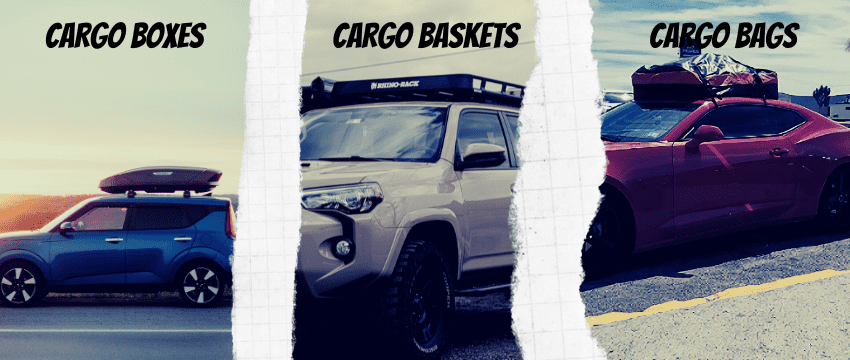
So, let’s bounce over to our first major alternative: the soft roof cargo bag. Imagine a massive, heavy-duty, waterproof duffel bag that you simply strap to your existing roof racks. Sounds pretty good, right? For many of you, this might be the perfect solution.
What Exactly Is a Soft Roof Bag?
Off the top of my head, it’s the simplest form of rooftop cargo carrying. Unlike a hard-shell roof box, it’s made from reinforced, tarpaulin-like materials (often PVC or polyester) with a waterproof coating and fully taped seams. It’s not a rigid container; it’s a flexible bag that you pack, roll closed, and secure with strong straps that hook or loop around your vehicle’s crossbars. Most don’t even require a dedicated rack system; some models are designed to strap directly to the bare roof of your SUV or van, using non-scratch pads for protection. It’s a much more old-school, straightforward approach.
The Awesome Perks of Going Soft
The number one benefit here is, without a doubt, the cost. You can get a highly-rated, durable soft roof bag for well under $200. That’s a fraction of the price of a hard shell box and its required rack system. That’s lit for your bank account. Storage is another huge win. When your trip is over, you simply empty the bag, roll it up or fold it, and stash it in a closet, under a bed, or even in your trunk for spontaneous shopping trips. It takes up a minuscule amount of space compared to its hard-shell cousin.
Because it’s soft and sits lower on the roof, it also has a much smaller impact on your fuel economy. While it still creates some drag, it’s nowhere near as bad as a big, bulky box. It’s also incredibly lightweight, making it a breeze to handle. No need to recruit a friend to help you heave it onto the roof; you can manage it solo. And if you’re someone who loves a custom look, you can’t easily change the color of a roof box, but with a soft bag, you could get creative. Though, if customization is your main jam, our guide on how to customize your roof box with paint or a wrap is still a cool read for hard-shell owners.
Real-Life Scenarios Where a Roof Bag Shines
Let’s paint a picture. You’re a college student driving home for summer break. Your sedan is packed, but you’ve got your dorm room microwave, a bin of books, and your winter clothes that won’t fit. A roof bag is the perfect, affordable, one-time-use solution. Another scenario? You’re a family heading to the beach for a week. You’ve got the kids, the dog, and a ton of beach gear—chairs, umbrellas, coolers. The trunk is for luggage and the roof bag is for the sandy, bulky items. It’s a no-brainer. Or, maybe you’re an outdoor enthusiast who needs to transport camping gear like sleeping bags, tents, and foam pads—items that are bulky but not necessarily fragile. A roof bag handles this with ease.
Okay, So What’s the Catch?
Fair enough, it’s not all sunshine and rainbows. The biggest downside is security and weather protection. A soft bag can be slashed open with a knife. If you’re leaving your car unattended for long periods with valuables inside, that’s a legitimate concern. While they are waterproof, they aren’t submersible. Driving through a torrential downpour for hours? There’s a small chance moisture could eventually seep in, whereas a hard clamshell box is essentially a sealed vault. Loading is also a different beast. You can’t just open a lid and toss stuff in. You need to pack it thoughtfully, often on the ground, and then lift the entire packed bag onto the roof, which can be heavy. Still, for the price and convenience, these trade-offs are totally worth it for many people.
The Cargo Trailer: Your Heavy-Duty, Road-Trip Hero
Now, let’s talk about the big gun, the cargo trailer. If a roof bag is your nimble buddy, a trailer is your reliable, powerhouse friend who can carry literally anything. When your cargo needs go beyond simple overflow and enter the realm of “I need to move a small apartment,” a trailer is where it’s at.
Unpacking the World of Small Cargo Trailers
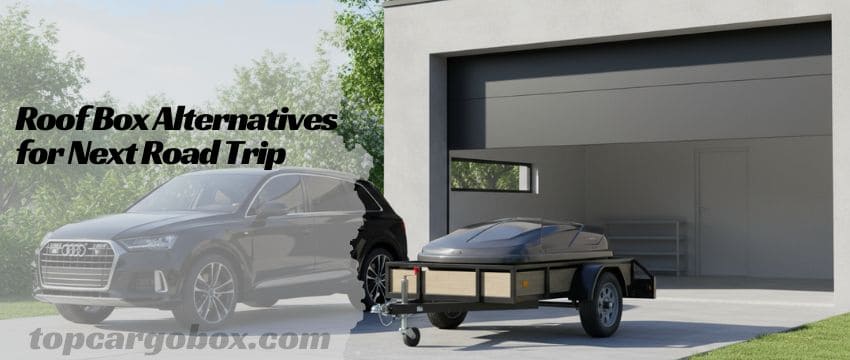
When I say “trailer,” you might picture an enormous RV or a massive equipment hauler. Nah, I’m talking about small, lightweight utility trailers or even dedicated cargo trailers you can rent from U-Haul or Home Depot. These are typically four-by-eight-foot platforms with low sides and a mesh gate, or fully enclosed small boxes on wheels. They hitch to a receiver on the back of your vehicle, and even many smaller SUVs and cars can tow them if you stay within your vehicle’s weight rating. It’s a whole different level of capacity.
Why a Trailer Might Be Your Ultimate Solution
The capacity is just insane. We’re talking about hundreds and hundreds of pounds and dozens of cubic feet of space. You could fit furniture, multiple sets of luggage, enough camping gear for a small army, or even a couple of dirt bikes. Are you kidding me? That’s awesome. Because the weight is carried on its own wheels and positioned low behind your car, it has virtually no impact on your vehicle’s center of gravity. Your car handles normally, which is a huge safety plus compared to a top-heavy load on the roof.
Your car’s interior stays quiet, too. No whooshing wind noise from the roof, which makes for a much more chill driving experience on long hauls. Everything is also easily accessible from the ground. No more climbing on tires like a monkey to dig for a specific bag. You just walk up to the back of the trailer and open it. And security? A fully enclosed trailer is like a mobile storage shed. You can lock it up and not worry about theft or weather one bit.
Picture Yourself with a Trailer
Imagine you’re moving your daughter into her first college apartment. You need to bring a mini-fridge, a microwave, a desk chair, and several plastic totes. A roof box or bag? Forget it. A small U-Haul trailer is the only way to go. Or, you’re a band heading to a gig a few states over. All your amplifiers, speakers, and instruments can be safely and securely stowed in a single, locked trailer. For a big family reunion, a trailer means you can bring all the extra coolers, folding tables, and lawn games without turning your minivan into an impossibly tight puzzle.
The Not-So-Fun Parts of Trailering
So, what’s the bummer? Well, you need a hitch. If your car doesn’t have one, installation can cost a few hundred dollars. Storage, again, is a factor. Where do you keep a trailer when you’re not using it? If you have a big driveway, it’s whatever. If you have limited space, it’s a problem, though renting is always an option. Then there’s the driving. It takes some getting used to. You have to make wider turns, be more cautious when backing up (which is a legit skill), and be aware of your increased length and width. You also need to check local laws regarding trailer registration, insurance, and licensing, which can be a hassle. And let’s be honest, towing anything, even a small trailer, will still have an impact on your fuel economy, sometimes even more than a roof box because of the increased weight and rolling resistance.
The Hitch-Mounted Cargo Carrier: The Best of Both Worlds?
Wait, there’s a third option that’s kind of a hybrid. What if you don’t want the hassle of a roof and you’re not ready for a full trailer? Enter the hitch-mounted cargo carrier, or as I like to call it, the “trunk extension.”
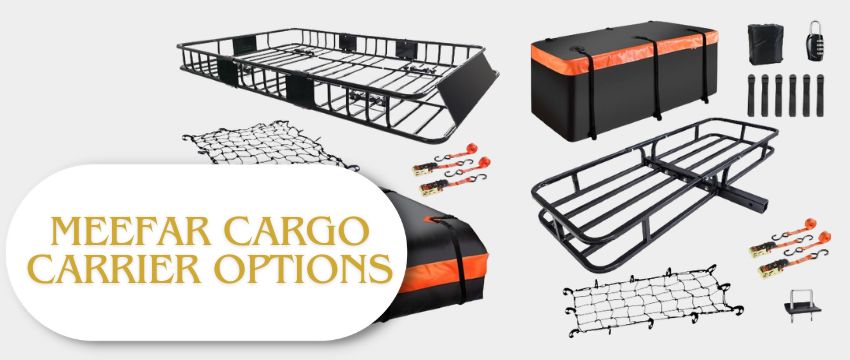
This is a metal platform that slides into your vehicle’s hitch receiver. You can get them in various sizes, and you simply strap your cargo—boxes, coolers, even a roof bag!—directly to the platform. Some models come with their own weatherproof enclosures, making them almost like a mini-trailer without the wheels. The beauty of this system is its simplicity. It keeps the weight low and centered, it’s generally easy to install and remove, and it’s far more affordable than a trailer. It’s a fantastic solution for those who already have a hitch, maybe for a bike rack, and need just a bit more space.
The downsides? It blocks access to your trunk or hatchback, so you’ll have to unload it every time you need to get into the back of your car. It also puts your cargo on full display and is potentially more vulnerable in a rear-end collision. But for many trips, it’s a perfect, simple solution that splits the difference beautifully.
Making Your Choice: A Side-by-Side Look at Your Options
Alright, we’ve thrown a lot of information at you. How’s it going? Feeling overwhelmed? Don’t! Let’s break it down into a simple, non-comparison table to help you visualize the core specs of each alternative. This should make the decision process way easier.
Option | Main Feature | Typical Cost (Product Only) | Ideal For | Key Consideration |
|---|---|---|---|---|
Flexible, waterproof bag that straps to roof racks or bare roof. | $100 – $300 | Occasional use, budget-conscious users, bulky & weather-resistant items. | Requires careful strapping; less secure than a hard box. | |
Cargo Trailer | A separate wheeled unit that hitches to your vehicle’s receiver. | $500 – $2000+ (or $50-$100/day rental) | Large moves, heavy/bulky items, situations requiring maximum security. | Requires a hitch and changes driving dynamics; storage can be difficult. |
A metal platform that inserts into your hitch receiver. | $80 – $400 | Users with a hitch who need extra space for coolers, bins, or bags. | Blocks rear vehicle access; cargo is exposed to elements and road debris. |
Your Vehicle and Lifestyle: The Ultimate Deciding Factors
So, how do you choose? It’s a long shot to think one solution is perfect for everyone. You’ve got to take a hard look at your own ride and how you live. First, what do you drive? A tiny hatchback has different limits than a full-size pickup truck. You must, and I mean must, check your vehicle’s owner’s manual for two critical numbers: the roof load capacity and the towing capacity. Exceeding these is not just a “my bad” situation; it’s downright dangerous and can damage your vehicle.
Do you have a hitch already? If so, a hitch carrier or trailer becomes a much more attractive option. If not, are you willing to invest in having one installed? How’s your garage or storage space looking? If it’s cramped, a soft bag is your clear winner. How often will you actually use this thing? If it’s once a year for a vacation, a rental trailer or an affordable roof bag makes more sense than a $1000 roof box gathering dust.
Think about your typical cargo. Is it just bulky sleeping bags and tents, or are you carrying expensive photography equipment and heirlooms? The security of a hard trailer or a roof box might be necessary. And let’s not forget about you. Are you physically able to lift a heavy, packed roof bag onto your car? Are you confident in your ability to drive and reverse with a trailer? Be honest with yourself. Your comfort and safety are what’s most important.
Beyond the Basics: Niche Considerations You Can’t Ignore
We’re almost there, but I’d be slacking if I didn’t mention a few more things. What about the environment? If you’re eco-conscious, you might be wondering about the sustainability of these products. It’s a great question. While most are made from plastics and metals, looking for durable, long-lasting products is the most sustainable choice. You might even find some interesting debates on whether eco-friendly roof boxes are fact or just greenwashing.
And legality! Yeah, it sucks, but you have to think about the law. For roof boxes, there are often roof box height rules worldwide that dictate how high your total vehicle height can be, which is crucial for garage clearances and ferries. For trailers, laws on lighting, brakes, and licensing vary wildly by state and country. A little research here can save you a massive headache and a ticket later. You good with that? Totally.
The Final Verdict: Pack Your Bags, Not Your Worries
So, dude, what’s the takeaway? A roof box is a fantastic piece of gear, but it’s not the be-all and end-all of cargo solutions. For real? A soft roof bag offers unbelievable value and convenience for the occasional user. A cargo trailer provides Herculean strength for the big jobs. And a hitch carrier is a clever, simple add-on for those with a receiver.
Your mission, should you choose to accept it, is to match the solution to your specific needs, not just follow the crowd. Don’t just default to the roof box because it’s what you see on other cars. Think about your budget, your vehicle, your cargo, and your own capabilities. By weighing all these factors, you’ll find the perfect travel companion for your adventures. You’ll save money, reduce stress, and maybe even discover a new favorite way to travel. Now get out there and hit the road!

Our team is creating outdoor-gear relevant articles with passion. If our articles can help you to find the correct solutions for your questions, we will be happy about that. In the content creation process, we usually collect accurate and useful information online or offline to compile our content in an organized way. Consequently, we can guarantee that you can discover some expected answers to your questions. We appreciate your time on our site.